AI Business Strategies and Business Scaling for 🚀📈 BUSINESS GROWTH 🚀📈
Dave Erickson 0:00
Many are quaking in their boots at the thought of AI replacing them, because AI brings real advantages. So how can you use those advantages for your business? On this ScreamingBox Podcast, we are going to discuss AI strategies to scale up your business. Please like our podcast and subscribe to our channel to get notified when the next podcast is released.
Dave Erickson 0:44
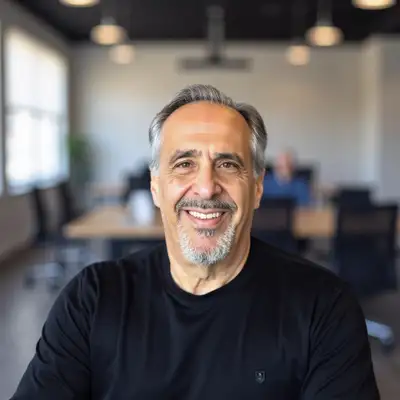
Even though many in the IT industry are worrying about how AI will replace them, we need to recognize the advantages AI brings to business. Welcome to the ScreamBox technology and business rundown podcast. In this podcast, Botond Seres and I, Dave Erickson, are going to examine strategies for using AI to scale up your business with Phil Mazziello, CEO and founder of crunch growth. Phil is a seasoned entrepreneur who has built and sold four companies. He launched his first venue at age 27 and went on to pioneer early e-commerce in the meals industry with the daily market, before co-founding raw essential skincare with Carol Ault. His work spans food, fashion, beauty and personal care with standout projects like 800 razors.com showcasing his ability to use creative PR and cost effective tactics to accelerate growth. As founder and CEO of crunch growth, Phil has become known for spotting emerging trends, blending technology with customer insight and developing digital and social strategies that help consumer brands scale quickly and efficiently. Alongside his entrepreneurial career, Phil has written influential books such as “The why behind the buy” and “Think, engage, thrive”. And he also hosts crunching growth on e-360 TV. Phil, welcome to the podcast.
Phil Mazziello 2:03
Thanks for having me. Thank you. Dave, thank you Botond.
Dave Erickson 2:07
To begin with, how'd you go from personal care business like 800 razors.com to AI?
Phil Mazziello 2:14
Well, you know, 800 razors were raw essentials. They were all ecom businesses. And when you have an econ business, you're always looking for automation tools that you can either use to analyze the work that you're doing, or you can use it to make the world better, or your ecom world better. And so as with crunch growth, you know we, we were early adopters of AI more than just LLMs. You know, the first place that we really saw the opportunity was with data and analytics. Because when you think about the industry that we're in, e com, you're always looking for ways to make your ads better. You're always looking for performance improvements. So the first place we started was to pull all the data in from ads to give us insight into what's working, what's not working. And this is, again, about this is going back about six or seven years ago. So that was sort of the first place that we, we looked and now then we started looking at ways that we can improve our operations with either workflows or agents. And I think it took us about three years to really figure out where to focus our effort to get the most bang out of our buck.
Dave Erickson 3:33
In using AI. Your initial AI usage was probably what; Python analyzing data, and then you started moving on as some of the AI tools expanded into generating some kind of agents. The focus of the agents, when you were focusing them on internal processes, where were you first looking at applying agents? I mean, because businesses, you know, they Oh, I can make an agent, but they don't know where to start without first.
Phil Mazziello 4:04
Well, we started down that path of saying, Okay, well, let's start making workflows and agents with AI. And the first place I looked, I made a list of about 10 processes that I hated doing every week and that I hated doing every month. And I said, you know, can we automate this? Because I can't stand doing it. I can't stand doing recaps. I can't stand doing, you know, sending out bills and all that. And, yeah, you could always automate but in our world, there's always additions; if it's if it were repetitive payments, repetitive costs, then it would be easy to set it up, but we always have to put in what we're doing every day, because, you know, it's an hour, it's an hour's business if somebody wants their website built, if somebody wants, you know, new ads built, or creative or whatever. So we started down that path, and then we started looking at, okay, we're, We created this agent, or created this workflow. Does it really have a payback, or was it just to make Phil's life easier? Or, you know, Brian's life easier, or anybody in the company's life easier? And so it was after. It was after, I think the probably, it took us about three years, I think, before we finally said, Okay, here's the parameters at which we'll focus on. It's got to have some sort of a payback. We're not trying to eliminate jobs, but we don't want to add jobs either, and we want everybody that we have hired to be focused on the ultimate goal, which is to grow the revenue of the clients we have, so the more we could take off their plate for doing mundane tasks, the better off we felt we were.
Botond Seres 5:51
First of all, it's really good to hear someone talk about AI other than LLMs. So thank you for that, Phil. I really appreciate it. And you mentioned that sometimes we need to evaluate if a certain tool has a return or if it just makes our life easier. But I would argue if it makes any of our lives easier, it's already a return. And I do wonder if you have some specific examples on that point, like, How can an agent or tool make our life considerably easier in ecom.
Phil Mazziello 6:25
Well, when you look at it from what we do again, you know, we look at, at what, what it is that our job is right. The name of the company is Crunch Growth Revenue Acceleration Agency, so our, our whole goal is to focus on driving revenue for our clients. That's what that's what we exist for. And so what we looked at was, you know, because in our world, you know, when we say Crunch Growth, it's when you crunch data. You crunch growth. Because everything, in my opinion, comes down to focusing on data analytics. And so when you think about what we do every day, we create ads, we run ads, we optimize ads. That's our core business. We do the same thing on social media. We, we create content for social media, whether it's short form video, long form video or whatever. And there's analytics behind that. I don't care about the vanity analytics of you know, likes, comments, shares I care about, did that piece of content generate a click to the website and that, did that get a sale? So the first place again we looked was, can we streamline that process, or can we create an agent that we can plug in that will give us, every day, a dashboard of, of results for everything that we did the day before, so that we we don't have to wait a week, or we don't have to rely on the back end of meta or the back end of Google or the back end of a DSP to tell us whether something worked, which is usually delayed. So that was sort of the first place. Then we started looking at it from the perspective of the LLM side, which was, how can we make these ads better? We know what works, so let's take that, and let's take what we know works. Put that into whether it was perplexity or Chat, GPT, whichever one we were using to say, how could we have improved here's, here's what this ad did. How could we have improved it? Here's the taglines we used, here's the messaging we used. And then it would give us back things to work on. And we would always take that with sort of a grain of salt and say, Okay, well, it's 60 to 70% there, because you got to, you still have to have human eyes on it. I don't care what anybody says. And then we would look at it for ideas. We would say, This is what worked for this brand. Give us some ideas of some other things that would work. And so that takes a lot of the brainstorming, time consuming work that we have to have every day to do, because now my people can do it, and you can get those results in a split second, instead of us sitting around brain in a brainstorming session saying, what else can we do? We've got all these things that just came at us that showed us data of what worked, showed us content that worked, showed us response rates that worked, and then gave us ideas for how to improve that. And that took about, I don't know, 10 minutes, maybe 15 minutes in total. So now we could have a much more productive and more rapid meeting to say, how can we improve this? Now we, instead of having a two hour meeting, we had a 30 minute meeting that gives us time back. Now we can go back and implement and create better creative. Do better things work. You know, work. The numbers are better. So that was really some examples of how we used it in the beginning. Now we have a, you know, process. I will tell you that I am totally in. The same court as American Eagle and some of the other brands that are saying, you know, we were not going to use AI slope to create our ads. We tested, and we've been testing for four or five years, creating ads with creating the creative part of ads with AI. And I'm totally against it, and I'll tell you why. The consumer, we predominantly deal with consumer products. The consumer wants authenticity. So when you're sitting there creating UGC content with AI that's no longer authentic because you just made that UGC content; you can't create an ad because now you've, you've, you've just created a fake ad, and customers recognize it, and the minute you do that, you've lost your authenticity, you've lost your audience, and you have, you have the potential of damaging your brand. Now a lot of people are jumping all over this, but I think it's going to, they're going to find 5, 6, 7, months later that they've, they've lost a bit of authenticity on their brand, and it's gonna, it's gonna hurt them. So we use AI for idea generation, we use AI to edit. We use AI to do a lot of things, but the creative that we produce for our clients is all real.
Dave Erickson 11:17
Yeah, I see a lot of AI generated ads and Tiktok shorts and Facebook videos and stuff. And it's so obvious that it's AI, yeah, and it's so obvious that these brands set up some automations that are spitting out, you know, an ad a day, or a piece of content a day. And, you know, the thing is, I think that the people looking at this stuff, they can tell AI, pretty easily nowadays, even though some of it is very realistic and looks very real, you can just tell. For some reason, you just get a sense it's not real, right?
Phil Mazziello 11:58
Yeah, it's funny. You should say that because I made a comment, there's one company that's advertising, you can do a week's worth of content in 10 minutes with our product, and they have the ad, and they're showing this woman speaking and saying, you know, I can create the content. And she's obviously, you know, created with AI. And the funny part was that when she it's always the hands with AI. And so when you look at her hands, all her fingers are different lengths, and they're all twisted in funny ways. And on one hand, she's got six fingers. And so I responded back and said, Yeah, you can create and I responded a comment on the post. I said, Yeah, you can create it. I said, but do you think that the consumer is going to look at this and say, why does this person have a two foot long finger, and why does she have six fingers on one hand? And it just created a whole bunch of other conversation with people. But that's the problem you run into. It's not perfect, and we have, again, we've experimented with it. I would love it. If you could just do plug and play, it would save me so much time and effort. But at the end of the day, what are you giving up? You're giving up authenticity. Now, people always point to the Coca Cola commercial. Well, that Christmas one? Well, that was done with AI. Yes, it was done with AI. But Coca Cola has always done animation videos, animation commercials around the holidays. So using AI to generate the animation, I have no problem with that, but that's animation. It's a big difference than sitting there saying I am endorsing this product, right? Because that's UGC, that's fake UGC content. So UGC content is supposed to be real. It's supposed to be people talking about your product. Now you're telling it what to do. So now the brand you just said to the customer, you know, I'm gonna lie to you and tell you how what I want you to think by using this UGC content and the customer again, don't think the customer's stupid. Don't ever think the customer is stupid. They're not, and don't, you don't want to play your customer that way. So when you do that, the customer is going to go, okay, so you're just, you're lying to me about your content you so you're lying to me about whatever you say about your product. So that's how I feel about
Botond Seres 14:16
So fake UGC is user generated content, right? I didn't know people do that, but I didn't It's crazy.
Phil Mazziello 14:28
There's entire apps built around it. Get this user generated.
Botond Seres 14:31
I did see tons of ads for creating your Tiktok influencer with AI, but didn't think it was a thing. I thought it was just about to be a thing.
Phil Mazziello 14:43
It's a thing, it's a thing, and the results aren't good. People are doing it. They're trying it, mostly smaller brands. They're trying it because they want to save money on, on building the creative right? And they're trying it, but then they do damage, and then they try and back out of it, and it's. A problem. There was an early company, I guess it's about three or four years ago, that was spending a lot of money on meta running ads. Just plug our app into your Shopify site, and it'll create ads, and all it was really doing was taking your product image photos and putting different backgrounds on it. It wasn't doing anything tremendous. But the problem was that it put a pixel on your site, and it put it in a really weird place. So when you got rid of the app, the pixel still existed. And so it was just anybody who was trying to get rid of the app. It totally messed up the information you were getting from the other pixels, the Google Pixel, the Meta pixel, whatever pixels you were using, and it, and it took us, on there, and we had to fix this on several sites. And it was, it was not fun. So, you know, there's a lot of, there's a lot of AI slopped, there's a lot of garbage out there right now. And I think there's going to be a good shake up of, you know, companies that are making these poor AI products. And you know,
Dave Erickson 16:08
Well, go ahead,
Botond Seres 16:10
Just one comment now that you mentioned it, the internet has been completely unusable for finding top 10 lists of anything for a few years now. Anyways, back to you, Dave.
Dave Erickson 16:21
I think that the mistake that some of these smaller businesses are doing is, you know, they're trying to do marketing and make marketing easier in an effort to quote scale themselves by kind of using this cheat of just generating a lot of, you know, content through AI, if they had set up the business, right, and maybe you have a different opinion of this, but from what you were saying initially, really the focus of ecommerce from the beginning really needs to be their data analytics. And if they had data analytics, they would see this content does not do well quite quickly. But it seems to me that these companies missed that step, and so they ran this stuff a lot longer than they should have. What do you think about that kind of sequence?
Phil Mazziello 17:07
No, I agree with you. You know, here's the thing, when you create a business, I don't care what business it is, you do a couple of things. You come out with your minimum viable product, and make sure that there's somebody out there that can use this product and that you're solving a problem. Then you go into you go and you create your product and see if you have product market fit, okay? And if you have product market fit, what you're really testing there is your messaging, right? Who's it for? What problem does it solve. Why does it why does it exist? How much are people willing to pay for it? Okay, now all of that gives you can be, can be tracked with data. So then you know if you've got a hit or not. And once you have that, once you have your messaging down pat, then yeah, you don't need AI, because if you have your messaging down pat, you can get real user generated content very quickly. You can generate real ads that will have an impact. I mean, we can look at the brands that have really popped in the last several years, that really had a great, strong message, like Graza olive oil. Okay? The world does not need, or we think the world does not need another olive oil. We've got 10 million olive oils out there. But what did Graza do? Grazer looked at the Olive Oil world, and they said, you know, people under 45 they don't really want to get into, you know, the olive the olive production, you know, the type of glass spend $50 what they really want to know is, which olive oil should I use to cook with which olive oil should I put on my salad? So Graza came up with a great olive oil in squeeze bottles. It's easy to use and it's one was drizzle and one was sizzle, very simple, and it took the internet by storm. It took social media by storm, and it blew up into retail. And next thing you know, it's everywhere. Same thing with Truff hot sauce. If there was ever a concept, if there was ever a category that had the lowest barrier to entry. I mean, you could make and bottle hot sauce in your kitchen, for God's sakes. They took it and elevated it. They said, Well, we're not going to make just hot sauce, we're going to put truffle in it, and now we've got this elevated hot sauce. And all of a sudden it's like, okay, well, that's different, right now, their message is totally different. And they elevated themselves. They pulled away from the pack. They did a couple of unique things in, with their work with whole foods. And boom, it took, it took off, but they had a unique message. So, I mean, there's a million different brands out there that have done that. And you can even look at it on the B2B side, and you can look at it on, you know, look at Go high level, and what they did and how they went. Market. I mean, it just, it was just fantastic. But they all, they all had the same, the same fabric, which was they had a unique message. They got that message out, and they proved product market fit, and they proved it very carefully and quickly. And so they don't need AI to make fake anything? Because they've got so many people talking about it.
Dave Erickson 20:25
Besides doing the basics of setting up the business, I think people do make a big mistake of skipping the product market fit phase, or doing it in kind of a lazy way, or even trying to use AI to do product market fit. (Oh sure) But I think having that as your kind of route of starting the business is important. But when it comes, I want to kind of come back to this, because I think this is an area I've talked to a lot of startups and a lot of businesses who seem to just really miss the data analytics importance. On the other hand, one of the reasons they seem to miss it is data analytics is really kind of big. And the question I hear a lot is, where do I start with data? What am I really trying to do? So if you're trying to start an E-commerce brand that you want to scale, and you want to focus on data, but there's a lot of data analytics. Where would you focus on first for data analytics, and what kind of AI tools would you use to process that data?
Phil Mazziello 21:30
Yeah, I mean, the first place that that we looked was, was with how ads were performing, because you can look at it on the surface and you can say, Okay, I ran this ad, and, you know, it had this cost per click, and it had this, it had this, and that's, that's part of it. But when you can look deeper as to because there's a ton of information out there, there's a ton and trying to pull that in manually and analyze it manually, it takes days, if not weeks, sometimes, to try and get to the point where you can see this ad reacted this way to this audience, generating this type of return, right? That's really what you're looking for, and is that the right audience for my product based on what information I already have about my product market fit and what I built right. So you're trying to connect three disparate systems, right, your product market fit, your website and, and your ads, and trying to put those together manually is a very difficult thing. You have to really be a soothsayer, you know. And believe me, we've tried, and I thought we were good at it, but we really weren't. So, so you look at there's, there's a million systems out there today that you can link up into, link up your system, right? Your website, which is pulling in data, right? It's pulling in data from Google. It's pulling in data from Search Console. It's pulling in data from everywhere, right? If you got a Shopify site, you've got apps on there that are pulling in data. So you've got all this data that you can pull, and then you've got your ads, and then you've got all the data you had when you did your product market fit study and your marketing studies. So, I mean, there's a million of them, you know, I can't even tell you how many of them you know were out there. You could just Google it, and you'll find a dozen of them. And they're great tools. You look for the ones that have been around for five years and six years, because they're the ones that are proven right, the ones that are there for a year. You don't know. So, and you'll get your answer. You'll get the answer to the question you're asking. And what's the question you're asking is really your prompt, right? What are you trying to solve? You know, for us, so for us, we we wound up building an agent we started out with with a couple of tools that we were off the shelf, and then we decided to build our own sort of agent where we can pull all this content in and ask it questions and say, you know, what are we trying to solve? What did this ad do? Who did the, who reacted to this ad? How often did they react? Where did they react? When did they react, daytime, nighttime and all that. And then you, it'll, it'll give you that answer. But now you, you're building this database of, of information that you can continue to query with just an agent that you can build. So, and then we started pulling in, because most of the brands we work with also sell on Amazon, which is completely different. Now, Amazon, if you're in the brand registry, has, you know, brand analytics, so you can pull that content in and you can see, you know, sort of what type of people are reacting to your content, or is your product on on the Amazon world, and does that mesh, mesh with the same thing that's happening in the E-commerce? World in your website, world. So, you know, those are the types of things, in my opinion, that are, that is a great use case for AI, because that is going to help you become a better advertiser and marketer.
Botond Seres 25:20
So you mentioned how people reacted to specific ads and when they reacted. I'm a bit more interested in the how. Like, I'm not sure what you mean exactly like, did they click on the ad? Did they watch the video? Did they watch the whole video? Did they purchase right after those sorts of things?
Phil Mazziello 25:43
Yeah, all of that. I mean, did, we created this piece of content, whether it's a video, whether it's a static image or whatever, did it have the desired effect? And again, I'm not worried about, you know, vanity metrics of, of likes, comments and shares. I'm worried about, did this piece of content that we produce, this video? Did it stop them in the first three seconds? Did they follow through and watch it for 30 seconds, and then what did they do afterwards? Did they click and go to the website? Did they just keep going? Did they never come back again? You know, we have to, too many tools today on our, on websites that you know you can basically retarget and follow somebody who's clicked on your website. Men have got tools that you can see if they clicked on your ad and where they've gone. Google's got tools. The demand side platforms have tools. So all these things have tools that you can see what people have done after they see your content. But the question is, did that content generate the desired result? Whatever your desired result is. In our case, we're always looking for more sales, because we're, that's our job is to develop, generate revenue, right? Some people are looking for it in terms of, you know, am I getting views? Because I want to get 100,000 views on my, on my piece of content, because I want to be a YouTuber and I want to make money on views. So it really depends on what your goal is. Again, our goal is always revenue.
Dave Erickson 27:14
You know, there's kind of, two types of response to ads. There's a direct response, where it generates them clicking through to something, or there's an indirect where they remember the ad and then later go somewhere. I know the indirect is harder. Has AI made some tools or made it easier to kind of track or to determine the indirect value of an ad?
Phil Mazziello 27:38
Yeah. So, I mean, there's latency tools, on like, Meta, I think has a 14 day or 21 day latency. Google has a 21 or day latency. So if somebody looks at an ad and then goes elsewhere, even if they go to Google and come in, you're tracking that because they've, you know, you're tracking it through the pixel. So yeah, I mean, to a certain extent, you can up to a certain time limit. Now, if somebody sees your ad today and comes back six months later, that's a little bit more difficult, but you know, certainly there are tools out there, or there's there's information out there, and there's information on your website. There's a million tools you can put on your website to track people, track IP addresses, track where they came from. So you know, you've got all this data, and that's my point, is that there's so much, so many tools and so much data to track, so much that how do you bring it all together? And that's, in my opinion, where AI comes in, because you, again, you can build an agent that's pulling all this data in that's going to give you a response, right? You're just writing the prompt to say, hey, here's my prompt today. I'm trying to find out how many people looked at my ad on Monday, and it took them two weeks to come back. How many you know? How many people saw my ad then went to my website, then went to Amazon and made a purchase, you know. So there's, there's all this track ability of what's going on. You can do it manually, but I think you'll drive yourself crazy trying to do it manually. It's, it's just too much data. And therefore, if you can't do it manually, and you try to do it manually, you're missing so many things that you could easily use some sort of an AI agent that you can either, like I said, you can build it yourself, or or there's plenty of them out there that can link up all this data and give you An analysis and give you an answer very quickly so, and that's money, because those, again, if you when you crunch data, you crunch growth, you crunch revenue growth, you crunch profit growth, you crunching that data and trying to figure out what worked, what didn't work, where it worked, how it worked, when it worked, why it worked, those all. All are important answers to questions that will make you perform better in terms of ads or social media or content or whatever. Because the goal, obviously, the goal for everybody is they want to get more organic content. You want to get more organic growth from either social media. You want to do a better job with content today. And I agree with this short form content, long form content that you can put out there, if that works on Tic Tok or or, you know, reels or YouTube shorts, to generate traffic to your website at a lower cost, right? Got to generate that content anyway, but if you can do it without spending money on turning that into an ad, then you're, you're, you're golden, excuse me, you're golden.
Botond Seres 30:48
Oh, yes, so data analytics has always been fertile ground for AI development, and
Phil Mazziello 30:55
I think so
Botond Seres 30:55
These days, short form content is incredibly popular, and you spoke to great lengths about how all of these different data sources can be annuals in a way to get useful data out of them, which which prompted me to think of this example that is going to play out in the next day or so. So just today, I saw an ad on Tiktok for a new burger. KFC has finally introduced in my country, the, I think it's the, what do you call it when there are two pieces of chicken and then just cheese and onion rings and barbecue sauce, the double down. I just saw this short form content clicked on the Learn More and then nothing more. So I wonder if I go to a KFC and then use my loyalty card, or even just my phone is tracked to be at that location, would that, in your opinion, register as a successful revenue increase?
Phil Mazziello 32:00
Yeah,
Botond Seres 32:00
to that ad,
Phil Mazziello 32:01
Yeah, absolutely. I mean, we, you know, we have tracking and some of the retailers have tracking tools. So that's another great, great, great point you just brought up, because we also run ads on connected television, which is run through the demand side platform. And we run connected TV ads which are very highly trackable, not like traditional television, right? So you see these ads, and then, you know, did you click on the ad? Did you get more information? Did you watch all the way through? And then they're also, you're also retargeting people through the demand side platforms that watched the connected TV ad. Because, again, you know who they are because they're connected, and then you're retargeting them online. Now you've also got tools at the retail level with signals and geo tracking, so now I can see if somebody clicked on the ad and went and made a purchase, right? So that's more data that you can bring in to say this ad was effective. Now you can look at something and say, Okay, this ad was really effective on connected TV, but it didn't seem to work on Google or Meta. Why is that? And then you try and figure that whole piece out. So there's a million different things you're looking for. You know, it's not so easy as just saying, Okay, well, my return on ad spend was a 3, so I'm happy. You shouldn't be happy. You should be trying to understand, at a deeper level, what's driving the behavior right? Because that was what my book, “The why behind the buy" was all about, was trying to figure out the behavior of why people buy, what, what triggers, what they're responding to, and how they're responding and when. So to your point, yeah, I mean, that would be a great use of AI to try and figure out if you saw the video, or you saw the commercial for the double down and went to KFC and made a purchase, they would be happy.
Dave Erickson 34:00
We haven't talked about it, but one of the factors for sales in E-commerce is obviously price.
Phil Mazziello 34:07
Yes.
Dave Erickson 34:08
Are there a lot more tools nowadays for analyzing whether your price is good or competitive, or how price affects the actual buy or the click through on that?
Phil Mazziello 34:19
Yeah, yeah, there's a, there's, there's tools that you can put on your website that will, you can do ABC testing and show different prices to different people. So they're seeing the same ad. They come into the same website, but when they get to the product page, they're seeing different prices. And you sort of test how that converted at which price point. There's also some of our partners where we're we, do some things with affiliates. On the affiliate side, the more sophisticated ones that have a ton of data themselves that can tell you, Okay, you know, at $59 we think that we can get you this many sales at 69 it's going to decrease by this at 79% so there's tons of price analytics tools out there, and you're 100% right. That's a great, that's a great price. I mean, a great point, because price does matter more and more every day, and even Amazon has, you know, some tools built in for price optimization and trying to figure out what's the right price for your product. The problem with the Amazon tools is they're always comparing it to, you know, whatever else is in that category, right? That whatever brands are in that category, not taking an inch count whether you're a premium product or not a premium product, and things like that. So because Amazon's always trying to get the lowest price possible.
Botond Seres 35:49
doing APC testing on price, I that's, that's quite, quite strange to me, because I do believe that over in Europe, at least, it's kind of a legal requirement to have only one campaign for a specific product to run at the same time. So I'm not sure how, how that would go over here, but that, that is certainly an interesting thing to do. I'm pretty sure it would be possible to do like one campaign specifically for Facebook, one specifically for TikTok and one specifically for Google ads.
Dave Erickson 36:26
Yeah, but then you're factoring in with the price, different demographics and different targets. So it may not be comparing apples to apples.
Phil Mazziello 36:35
You know, you should always be testing something right on your website or whatever. I mean, you know, conversion rate optimization is a whole entire discipline, and that's really what we're talking about here. You know, when you're talking about price, because you're talking about how your site is going to convert, and when you change price, or when you do what you're doing. I mean, you can do it the way that you're talking about, where you can have an ad on Tiktok, you can have an ad on Google, you can have an ad on, on Meta, you can have an ad, you know, in different areas to bring people in. To me, that's more messaging testing to do that than price testing. The price testing has to happen on the website, and you want it to be, you should know who your customer target is, right? You when you because you've already done that minimum viable product and product market fit. So you should have a clear idea of who your customer is that you're going after. Now you're delivering ads. Maybe you're changing the messaging, maybe you're changing different pieces to it, but when they get to the site, right? You want, you want some parody, right? You want to make sure that all the people are responding to the same ad coming in, because you can only test one thing. And if we're testing price, you don't want to be testing my ads are different and my price is different, because then you don't know which combination made what so you keep your ads the same on all your platforms, drive them into the same product page with the same information, the same data. The only thing that changes is the price. And you're doing this on ABC testing, so you're changing you, your, your price on and then looking at your conversion rate. And then if you find your optimal price, then you can go and you can sort of test that against, did that price work better with this demographic, this demographic, or this demographic, but you should only be testing one variable at a time, because you can't mucky you don't want to mucky up your water.
Botond Seres 38:30
Oh, and speaking of messaging, I always did wonder if it's a good idea or even standard practice to change messaging based on targeted age groups or gender or socio economic or geographic locations?
Phil Mazziello 38:46
Yeah, well, that's a good question. You're when, when you come up with your product market fit, when you've done your, your minimum viable product, your product market fit, you've sort of framed your messaging right? Who, who, who it works for, why it works, why they want to buy it. What problem does it solve at what price point? Now, can you change that messaging? I think you have to be careful. I mean, you can, you can change how you present that messaging. But I think your underlying message has to remain consistent until it stops working. Then you have to figure out why it stops working, right? But too many times people go and change their messaging because they go, they wake up one day and say, we should change the messaging to this. And that's when you wind up with, like an up and down with your brand. Your brand has your message, right? You know, you know, you don't want to. I'm trying to think of a great example, you know, of, of, you know, Nike is a great example, right? Their message has always been about. Performance, right? Better performance. Now they've changed the way that they present that message, whether it's, you know, in golf or whether it's in basketball or whatever, but the answer is, you know the message, the underlying message is always about, you wear these shoes, you get better performance, right? The Under Armor, same thing you know, you know, Crest toothpaste tied laundry detergent. It's always about the same thing. The messaging hasn't changed, just some of the words, but the, the underlying message is always the same. Does that make sense? Because if you start playing around too much with changing your messaging, and I've seen this happen, I've seen brands that started out and went from zero to like 20, 25 million, 30 million, and then all of a sudden they decide they want to change their messaging, and then everything starts going backwards, and then they can't figure out why. Well, you just change your messaging, and now you change who you're delivering that message to and you just change your audience. So now you've just changed your entire business, and maybe it wasn't the right decision.
Dave Erickson 41:03
right?
Phil Mazziello 41:04
So you have to be careful about how you do that. You should always do it with some sort of, you know, quantitative, qualitative, you know, review of what's happening.
Botond Seres 41:16
And sometimes even if messaging stays the same, Product Market Fit changes significantly. And one of the examples, I suppose it's a bit similar to 800 razors, is Dollar Shave Club. They started out with the messaging that cheap razors delivered monthly, and today I'm not sure if they exist, but now it's more like very expensive razors monthly. Maybe,
Phil Mazziello 41:42
Yeah, no, no, you're 100% right. I mean, you, you look, we all started out, you know, we, we did it, I think first. I don't even know what happened in that category, but, you know, we, when we decided to go into the shaving business, we were actually in the skin in the beauty business, and we wanted to do a woman's product, because we, our product developer, had come up with this really great woman's shave cream, and it was a beautiful product, not a foamy shave cream, but more like a moisturizing shave cream. And so we went to Energizer Corp, which now it's called Edgewell, but they own Chicken Time, and we said, hey, look, we want to do this. We want to have a private label women's razor. And they said, you know, we're up for it. We don't understand direct to consumer. We'd love to learn from you. As long as you're willing to share, we'll be happy to do it. It's going to take about a year. And long story short, we wound up selling raw essentials while we were in the middle of doing that. So then we went to them and said, we want to do men's and women's and women's still had this great shave cream. And for us, the focus was on the shave, right? It was really the ultimate shave. Was the brand 800 razor was a site, and we and we had this great shave cream and aftershave lotion and some other stuff. So to me, the razor was incidental. The Razor was a trip wire, because what we really wanted was people to buy other stuff, similar to what Harry's does, right? Harry's runs, that $5 Shave thing still does it. You can't, it's the ultimate, you know, it's, it's the ultimate value. You can't not buy it, right? Once they have you, they're going to sell you a bunch of other stuff. But, and then the market just extends. Exploded. Everybody came in, Harry's came in, Dollar Shave Club came in, shape mob came in. All these people came in and Dollar Shave Club, yeah, I started out with cheap razors, but then they expanded that whole category. They started doing hair care, face care, body care for men. And then they didn't own their manufacturing, and so they didn't have control over the cost. And so I think that plays a big role, because if you're going to have a cheap razor, you need to be able to control somehow, because they were just getting razors from a company called Dorko, so it wasn't really their razor anymore. So I think that that plays a role in the change, you know, that, and the fact that they sold to Unilever, and they got into retail, and retail has a different economic structure than, than direct to consumer. So I think a lot plays into it, you know. But yeah, their message changed. The model changed. The business model changed so it happens. Sometimes it happens, okay. And sometimes it takes you backwards.
Dave Erickson 44:28
If you were starting 800 razors.com, over again, what AI tools would you work with to grow that business quicker or scale it faster than what you had when you started it.
Phil Mazziello 44:43
That's a good question. I tell you, I would probably use Claude a lot more today to do a analysis of the market with very. Various price points and various messaging. And I would just ask it, and I would start with that, as far as a tool goes. And then I think, what I, I would probably use it more on the marketing side and the advertising side, than anywhere just to get more ideas. You know what I'll tell you. Let me give you an interesting little tidbit when we started it, and this goes for everybody, when they all started Dollar Shave Club was actually out there for a year and a half before they even did the video which launched them. You know, we struggled the first year and a half. It was difficult. We were running ads, we were doing things. We thought that the message would resonate. It wasn't resonating. We didn't really have any tools out there to say, Why isn't this message resonating? What's the problem? We were sort of going, you know, on our own instinct, and we were frustrated. Our ads weren't doing well. They weren't performing well. We had, you know, we were analyzing them manually, so we didn't have any agents that we could rely on to check those ads and say, you know, how come the ad platforms were limited. The ad availability was limited. We did traditional television, which notoriously, is untrackable. All you get is reach and all this. So there were a lot of things that we were doing that we were frustrated with and we weren't getting anywhere, and we were spending an awful lot of money. And I woke up one morning, and I love sports, and I was reading that there was this baseball player, Brian Wilson, who had this epic beard, you know, he played, he was a pitcher for San Francisco Giants, and at the time. You know, we're going back now, this was 2012 I think 2011 somewhere around there. And he had this beard, and Major League Baseball hated it because they didn't, it wasn't, didn't fit with what, how they wanted to present players. And he wasn't shaving it. And he looked, you know, Major League Baseball just thought he looked scruffy and, and he wasn't doing anything about it anyway, got injured, had Tommy John surgery. The Giants traded him to the Dodgers. He was going to, he was going to pitch for the first time in a year, and it was big news. And I saw that in the morning, and I thought to myself, you know, offer this guy a million bucks to shave with our razor. So I sent an email to his people, and I said, I want to offer Brian a million bucks to shave with our razor. All I wanted to get back was, we'll run this by Brian. That's what I got back. So I gave it to the PR firm, and now I could legally say we're in discussions with Brian Wilson to shave with our razor for a million dollars. Well, for some reason, it went nuts, like we were on every sports station, everybody thought we were insane, just to get a guy to shave for a million bucks. And social media at the time was really just Facebook and Instagram, and Instagram was just pretty much starting, and it was so we were getting people, you know, sending us pictures, some not safe for work, of their body parts, saying, I'll shave this for 10 grand, five I'll shave this for five grand. I'll shave this for 100 grand. People were mad at us because they were like, how could you, you know, give a millionaire a million dollars just to shave I'll take, you know, my children are starving in the world, right? So it created this whole thing. But what it really did for us, what is, it got us in the news everywhere, and it launched us, right? That stupid little you know event turned into, it sort of broke us through, right? Got us as sort of the crazy guys who you know offered a million dollars. And so I learned from that that sometimes you have to do stunts to get into the news, to get your, your brand out there, to break through the clutter, right? Because your message, maybe your messaging isn't working, or your messaging isn't strong enough, or nobody's caring about the messaging, right? And that's sort of what we were faced with. So to answer your question about AI tools, I mean, it was the same ones I'm using today. I just wish they were out there then we, we didn't have them. So I couldn't analyze, I couldn't analyze how my ads were doing, what the problems were. We were all doing it manually, right? I couldn't find the results. God, television was awful. I mean, we were spending, I was so frustrated with television because with traditional television, because you spend all this money, and you got these buyers out there saying, no, no, don't worry. You know, it's good. You have to be on this channel. You have to be on this channel. And really like the difference between connected TV and. Traditional TV. Traditional TV, you're targeting a channel this, your customer is going to be on ESPN, but you don't really know that. They don't know that. Whereas connected TV, you're targeting a person, you're targeting a persona, and that persona is much more targetable and it's much more trackable. So I can track people on connected TV. I can track a persona on connected TV. I can see if it hits all I get back on traditional TV is, oh, impressions. Impressions don't pay the bills. Impressions don't tell me anything, you know, I don't care what anybody sells. Everybody talks about impressions. Impressions are nothing to me. That's air, right? I want to know, did I get any traffic to my website, and so we used to do these things, where we would run these I finally took over the ad buying myself for TV. And I used to try and do these things at different times, and I would watch the traffic on the website to see if it did anything. And what I realized after wasting millions of dollars on traditional TV with no AI support to analyze it, no nothing, just my own brain, which cost me millions of dollars, was that it had nothing to do with the channel. It had everything to do with the cost of the TV spot relative to your selling price. That's what it had to do with so I would run these ads, I would start looking for just cheap spots, you know. And I could find $100 spot, a $50 3 second spot, and all I needed to do was sell two products during that so how many people are out there. And so I would run these cheap spots, and then I would find a hit, and I would say, Okay, well, this is working. And then I would just keep doing it. And what happens is, once you start doing that on a regular basis, they give you free spots, which drives down your effective cost. So now it's like, okay, now I hit on something that had nothing to do with the channel, had everything to do with the cost of the spot relative to your sell price. But again, if I had AI, I probably would have learned that the first month. But, you know, two years and wasting millions of dollars. Same thing with the ads, same thing with the you know, like I explained with Brian Wilson, we had no no tools out there, nothing.
Dave Erickson 52:19
As you brought up, your success in that area was because of creativity, which isn't something that AI is very good at right now. So that was definitely a thing. And we went to the Dodgers, Cub game yesterday. There were a lot of players with big beards out on the field.
Phil Mazziello 52:40
yeah
Dave Erickson 52:40
So now it's ripe for that kind of thing,
Phil Mazziello 52:43
yeah, yeah, no, no, no at the time, it wasn't, but at the you know, today, yeah, beards are everywhere.
Botond Seres 52:49
So Phil, in your personal opinion. What is the future of advertisements?
Phil Mazziello 52:56
The future of advertising? Yeah, I think that one thing that I can say about AI and the future of advertising is that AI is giving us a much clearer picture of who our customer target is, which I think is the most important thing, because you know, you don't want to go as broad as You want to as you can right with AI tools, especially on demand side platforms, you're able to really hone in on that persona. You have to build your persona. You have to sort of use your AI tools on the back end to try and figure out when you're doing your product market fit, your minimum viable product. Who is the persona? Build that persona and then execute on that persona, and that's going to give you a better return on your ad spend and a more effective ad. And to your point, Dave, you know about creativity, you're 100% right. AI can't give you the creativity, but what it can do is you can ask it, you know, for some ideas, and then it might spark something in you to come up with an idea, right? Because sitting in a room with a bunch of people trying to come up with ideas, sometimes it takes forever, but AI can sort of come up with a bunch of really wacky ideas, and you can keep prompting it for like an hour, and all of a sudden it may come up with something that you go, Oh, I can take that and I can run with it. So I think that's really the future of advertising.
Dave Erickson 54:26
All right. Well, Phil, let us know what are you up to now, and what are you kind of doing? And how can people get a hold of you? And what are you, what kind of people are you looking to help?
Phil Mazziello 54:40
Yeah, I mean, there's a couple of things. One is with, you know, you can always get me a Crunch Growth phil@crunchgrowth.com, you can go to crunch growth.com that's, that's the agency. And what we help, we help brands to scale. That's what we do. philmassiello.com, I coach, I coach founders, I coach business people on scaling growth and. I'm, you know, and I have a TV show called crunching your growth. It's on e360 TV every Tuesday at 6pm and we focus on bring it. We interview founders who have scaled to give prospective entrepreneurs, scaling entrepreneurs, people who want to dip their toe in the water, a realistic view of what it takes to build a business, build a brand and build it successfully.
Dave Erickson 55:23
Phil, thank you so much for being on our podcast and discussing business strategies for using AI to scale up your business.
Botond Seres 55:31
Well, we are at the end of the episode today, but before you go, we want you to think about this important question.
Dave Erickson 55:38
How will you use AI to scale up your business?
Botond Seres 55:42
For our listeners, please subscribe and click Notifications to join us for our next ScreamingBox technology and business rundown podcast, and until then, try using AI to scale your business.
Dave Erickson 55:55
Thank you very much for taking this journey with us. Join us for our next exciting exploration of technology and business in the first week of every month. Please help us by subscribing, liking and following us on whichever platform you're listening to or watching us on. We hope you enjoyed this podcast, and please let us know any subjects or topics you would like us to discuss in our next podcast by leaving a message for us in the comment sections or sending us a Twitter DM till next month, please stay happy and healthy.
Creators and Guests