Strategic Networking Using Neuroscience and AI Tools - A Real SUPERPOWER!!
Dave Erickson 0:00
Standing in a room full of strangers, sweating, shaking with fear, and barely able to speak is not going to help build strong relationships. So how do you get past all that and build powerful business relationships? On this ScreamingBox Podcast, we are going to discuss strategic networking using neuroscience and AI tools to build better connections. Please like our podcast and subscribe to our channel to get notified when the next podcast is released.
Dave Erickson 0:49
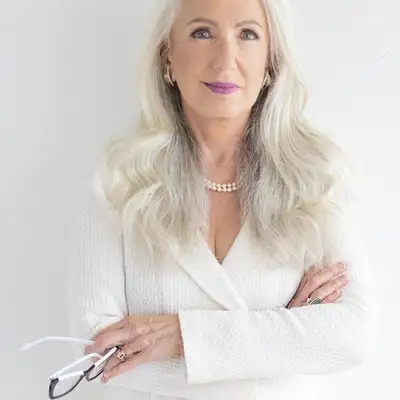
Strategic networking has always been essential for career growth and business success, but today's professional landscape is noisier, faster, and crazier than ever. So, how do you form meaningful professional relationships in a world overflowing with information and competing priorities? Welcome to the Screamingbox Technology and Business Rundown Podcast. In this podcast, Botond Sedesh and I, Dave Erickson, are going to science out how you can use neuroscience insights and AI tools.To build genuine opportunity-creating relationships with Dr. Elizabeth Fried, award-winning executive coach and author of Strategic Networking, a practical playbook. Elizabeth has spent more than 40 years advising senior leaders, business owners, and professionals who are trying to navigate complex decisions and career transitions. Her work distills decades of coaching into clear, actionable strategies that can help people build authentic, mutually beneficial connections, not just collecting business cards or working a room. She developed her strategic networking framework while coaching elite military special operators, including Navy SEALs and Marine Raiders, in helping them transition into civilian careers by building trust, communicating value, and forming relationships that open doors. Today she applies the same methodology to business leaders and professionals seeking influence, opportunity, and long-term success. Elizabeth also focuses on how modern AI research tools can help people prepare more effectively for meetings, understanding others more deeply, and creating greater value in every interaction. Elizabeth, welcome to the podcast.
Dr. Elizabeth Fried 02:27
Thank you and thank you for such a beautiful introduction, integrating all the things that I did and you did a wonderful job doing that. Thank you. Yeah. So it's really great to be here. Thank you.
Dave Erickson 02:40
Well, to begin with, what drew you to neuroscience and applying it to relationship building?
Dr. Elizabeth Fried 02:46
Well, my specialty in executive coaching has been primarily leadership development and helping leaders stay cool under pressure and managing their stress and developing executive presence. Now, in order to do that, you have to make people feel valued and understood and have good relationships with people, and that is initially built on trust. How do you get people to trust you? Well, neuroscience is the key because what you want to do is to be able to connect with other people. How do you do that? You need to stay calm, you need to be consistent in your behavior, and there are a variety of techniques so that you calm down that amygdala, that guard, that fight or flight situation that can cause you to kick you off your game. So part of that was how I got involved in this and then in terms of building relationships, it's developing we have something called mirror neurons, where when we talk to somebody else, we connect with them. And when you are able to connect, that releases something called oxytocin, which is the bonding hormone. When that happens, people drop their defenses and they're more likely to be open to you. So that's the whole sort of theory behind it. So it matched very well with networking because when you network with somebody, you want to make them feel seen, valued, and understood. And it's not just about you. That's the thing that's important. So then I included AI because AI provides you an additional tool so that you can prepare to understand the other person so that you are well prepared to make that connection. Now, all of this was born out of the work I did with the special operators at the Honor Foundation. I work with, as you said, Navy SEALs, Green Berets, Delta Force, Army Rangers, Marine Raiders, all those folks and this program helps them transition from the military into the civilian workforce. In order to do that, this is a world they don't know, and very honestly, they would rather enter a firefight in Afghanistan than to have to go into the civilian workforce and talk to people they don't know. So I had to find a way to make it easier for them to do it and to talk to them in their language. One of the things that they need to do is I help them with their resume. I help them un, identify what their skill set is and the skills they used in the military and how that translates to the civilian workforce. But then they had, they don't know what jobs are out there. They need to do job exploration. And in order to do that, they needed to network and part of that process was they were required as part of the program to do what is known as 50 cups of coffee. That means whether they're in person or virtual, they had to connect with other people. This was terrifying to them. So I said, all right, how can I help them most be most effective? We'll have to talk their language. So I said, All right, I want you to think of this as a mission, like you have a mission that you have to accomplish and I'm going to give you the executable strategies to use so that you can reach your target and accomplish your mission. I'm talking their language now. All right. So then I came up with a protocol and told them very specifically how to connect, how to approach people, what types of questions to ask, and to have them understand that it is not about them. And this is a key point,and I'm quoting my friend, the now deceased Dr. Mark Gouldston, who wrote a book on communication, and one of his statements was, be more interested than interesting. And one of the things I had to guard them about, tell them to guard against is I said, Listen, you're going to connect with these people and they're going to think, man, this is so cool, I'm going to get to talk to a Navy SEAL. And the first thing they're going to want to know is to talk about, tell you, tell you about themselves, tell, they want to hear about you. I mean, you got it. You gotta control that. So I'm gonna give you permission as your coach to say, listen, I really appreciate that you want to know about me, but the assignment I have is to explore different jobs and to really learn about you. And if it's okay with you, and this is a neuroscience term, asking permission, dropping down the defenses. If it's okay with you, if I could proceed by asking you these questions that I need to do for this assignment, then when we're done, I'm happy to answer anything that you would like to know about me, as long as it's not classified, and we can proceed from there. So this is part of what I did. And I got to thinking and I said, you know, it was very successful with these fellows. They just grabbed onto it. They had a, they had a protocol, they knew what to follow, there was a framework, they're used to that. And we helped grease the skids in that way. Well, I got to thinking and I said, wait a minute, there are more people in this world that need this information and if I just expand it slightly, it could go beyond job exploration, career exploration. It could be for career transition. It could be for somebody who wanted to develop and wanted to be more seen in their organization so they're more promotable. Could be used for developing business leads. It could be used for making yourself visible to other departments. And in my coaching and how this sort of came about, you know, things have a tendency to just kind of evolve. I got a coaching engagement where someone said to me, you know, we have to give this fellow it was a mergers and acquisitions department and we have this guy, he's really terrific, but he's kind of laid back and kind of shy. He sits back in meetings and he doesn't talk to people. And nobody really knows that he's the go to guy. When they are looking at an organization that they want to purchase. He's the guy that can tell them the pros and the cons, and he is a great resource, but they don't know him. How can we get the rest of the company to utilize his skills? So I worked with him and then took this protocol I had developed for the military and expanded it based on his objective, which now brings to point. When you're going to network, you need to know first and foremost, what is your objective? What do you want to do with this information? Like I said before, do you want to do job exploration? Do you want to do career development? Do you want to be more visible? What is it? Because that then creates the roadmap for everything you're going to do after that. So you need to get really clear on your objective.
Dave Erickson 10:17
So it's, it's goal setting is really critical in the beginning. Now you mentioned something that I, I thought was interesting, and, and when people think of networking and reaching out and meeting people, it's a subject that is very emotional for a lot of people for some people it's not, but for many people it is, and, and it's because they're dealing with fear, right? The fear of meeting new people, the fear of putting themselves out there. So I'm kind of curious on your take the first step or the first kind of thing in networking is how do you deal with this fear? How should people kind of deal with this fear so they can get over it and move on to the next step, which is the actual process of networking and, and meeting people?
Dr. Elizabeth Fried 11:05
Okay, so I'm gonna go back to something I wrote an article about ten years ago. It's called the No Wallflower Rule. Okay. So what happens here is all of us have had to go to some networking event, whether it's company sponsored or something, and you're just kind of dreading it because you gotta, you know, glad hand people. You think it's all about glad handling. Well it's not, okay. And I was coaching my niece, who was starting her own legal practice, and she needed to break into but she was in immigration law and she needed to break into the human resource community. So I suggested she, she join a Society of Human Resource Management local chapter and go to their meetings. Well what do I do when I'm sitting at the table and how do I talk to them? And I'm just so nervous I get to so I said, okay. I said, you like to cook and bake, don't you? And she said, Yeah. I said you like to entertain, don't you? She said yeah. I said, so when you have people coming over, what's, what do you want to do? She said, Well, I want to make sure they're comfortable and that they have what they need. I said, Exactly. So when you go into these meetings and you don't know anybody, here's the way you change your mind shift. It's your party, you have to make sure everyone is comfortable and happy there. That's your job when you go in there. And so I say to people, when you walk, the first thing people do is they tend to race over to the appetizers and fill up their plate and then find some wall to lean against if they don't know anybody in the room. So I said, now what do you do? Yeah, you can fill up your plate with appetizers, but look around and see if you see anybody that seems to be alone and not talking to someone. Then you go over there and they may have a name tag on. So you might say, Hello Dave, I'm Elizabeth Freid, so nice to meet you. So what sessions have you attended at this conference today? And which ones did you like the best? Or are there any that you think you might steer me away from? And have a few back pocket questions ready to ask people so that you can engage them. And there's Dave. He's, he's like, so happy that somebody came over to talk to him. And now you're engaging him about something that you're both interested in and you're wanting his opinion. That's saying you're valuing him and you're listening. So that's one way of overcoming. You gotta change your mindshift. It's not about you, it's about the other person, and it's trying to make the other person feel seen, valued and it when you take that pressure off yourself and you're the one that's helping somebody else, changes the whole dynamic.
Botond Seres 13:58
Elizabeth, really glad to hear that. I'm really glad to hear that you especially recommend talking to people about their interests because when I do that, I know I'm a big fan of popular neuroscience, so I tend to do that a lot and I always feel like this heavy imposter syndrome, like I'm just doing this because I read it in a book at some point. But it's really good to hear that that is actually something that is beneficial to both parties and is not just a trick.
Dr. Elizabeth Fried 14:37
It is. And now I'm gonna take it a step further. Okay. And you have to be authentic. You can't come in there like a robot and say, why are you….
Botond Seres 14:45
No, no, no. In my opinion, the point is to find the common interests and then we can go from there.
Dr. Elizabeth Fried 14:52
Right. So when I talk in my, in Strategic networking, a practical playbook, I say one of the things, once you know what your objective is, now you're going to use AI to do, to be a detective of sorts and learn about this person that you're going to meet. Again, this is going to take the pressure off of you. So you go to AI and you say, I want to know about this person's background, their education, their work background, their interests, where they've spoken, what they've written, do they have any legal problems? Because you don't want to talk to anybody that's shady, you know? So I want to know that. And then you want to find out where they volunteered and things like that. So you can find something to draw them out initially to connect with them. The other thing that the AI does for you and it creates a report, you're doing deep research, it'll tell you how this person wants to be approached. Some people are very direct, other people like to like humor there, and it'll tell you exactly the way to approach somebody. I have in this in my guide a report on me which says: do not flatter her, do not ramble and go on, she has no patience for that, she's direct, cut to the chase, say what you need she'll appreciate that. So if you know that up front, you know how to approach that person, and that's why the AI is helpful. So you're applying both the neuroscience that you know about what to connect on, and I mean, yeah, I mean not neuroscience, the AI on what to connect on, but then you're applying the neuroscience on how to connect with that. And that's all important as well. So you know, the other thing about the, going back to that article that I wrote on the No Wallflower rule, another thing you can do, sometimes you get this lonely person and now you can't get away from them and you know you need to meet other people. Deal with that in a gracious way. And still make them feel valued. Let me just back up. How many times have you met somebody at a party and you're talking to them and they're looking over your shoulder to see who's coming up. Has that ever happened to you? you just want to go. Hey, eyes here. But so it just telling you they're not really sincere and they're really giving, tipping their hand that they're not away. You want to make sure you make eye contact with somebody, but now the conversation has you, has been useful, but you know you need to meet, go on and meet other people. The way to handle that is to say something like this, you know, I really enjoy talking with you. Would it be okay for you to give me your contact information or your LinkedIn? Again, would it be okay? That is asking permission to get your contact information so I could connect and follow up with you if you have a business card or you want to send me a text, that would be great. So that I can, if I have further questions, I can, I can reach out to you again. Would that be all right? Well, this person's gonna give you their contact information, you have it, you know what you've said, and then you can say, I need to continue to circulate, but I definitely wanna make sure I have your contact information. That lets them feel valued. It's not being rude, okay. Another thing that you can do, because really networking is about connection. It's not, let me collect as many business cards as I can get, it's about connection. So perhaps in this conversation, another way is you found out this person was a sailor, and you happen to know that somebody else in the room is a sailor and has a sailboat. You can say to them, You know something? I'm so glad you shared with me about your sailing. There's someone here I'd like for you to meet who also has an interest in sailing. And then you walk them over to that person. And you say, Hey Botond, I wanna introduce you to Dave. Dave has a thirty-two foot sloop that he sails on Long Island and at a yacht club not far from the yacht club your, your boat is docked at. And then you can say, you know, Botond, Dave, Botond has and you just go on with what you know and then they're immediately going to start talking. And you just slip away. Now what happens is they are delighted that you took the opportunity to make that connection for them. You've done your job. Remember it's your party, and you've made people feel happy and
Dave Erickson 20:01
You get goodwill out of it with both people.
Dr. Elizabeth Fried 20:03
That's right. That's right. So that's how you do it. And that helps you overcome these kinds of things because you're so worried about yourself initially, but if you're working to help other people, it just changes the whole dynamic.
Dave Erickson 20:19
It seems like in networking there's kind of two you know, there's two types. There's targeted networking where you want to reach out to somebody and then there's this public meeting networking where you're in a group of people and you're meeting people, right? They, they seem to have two different strategies and you, you've kind of alluded a little bit that there's prep involved in both. Maybe we can talk a little bit and focus on first the targeted one, because that's the one I think a lot of people in their mind say; I wish I could talk to the vice president of XYZ company, you know, so maybe we can talk a little bit about that. Somebody wants to reach out to some targeted people and connect with them. You know, what's kind of the process that they should go through to, to start doing that?
Dr. Elizabeth Fried 21:12
Well, the process that they should go to is find out who are these people. You need to know what your objective is. So, based on your objective, those are going to be the questions that you're going to ask them. But the first thing is you have to do your detective work. So you go out and you figure out who it is. Then if you know somebody who knows that person, you can reach out to them and say, Hey, I'd like to meet Joe Blow. He's whatever, do you know him? Yes, I do.
Can you possibly make an introduction? I would like to be able to, and you say what you want, to meet them so that I can learn more about blah blah. And then they may help with that introduction. That's one way. Another way is to reach out to this person via LinkedIn or through email, and I provide you with some email templates to say, you know, Botond, you were referred to me by Dave and he indicated to me that you would be a good resource because I am exploring blah blah blah. Okay, and then you say I would very much appreciate having twenty minutes of your time if I could, to set up a call, a Zoom or whatever it is that you want to say. Here are three times that I'm available. If that aligns with your schedule, if you could pick one, that's great. If not, if you give me some other options, that would be terrific. Okay? And you send them an email. You send them one, then you might send them a follow up. If they don't answer you, there's nothing you could do about it. But that's how you start. It always helps to have that warm lead. In the cases of the SEALs when I worked with them, I would contact, initially, I would make their first one or two introductions and I would introduce them to each other and I would say, Dave, I want to introduce you to Botond, Botond Seres is, et cetera, et cetera, et cetera, et cetera, whatever. And then Botond, this is Dave. Dave does this. I would very much like to see the two of you have an opportunity to talk to each other and I would appreciate it if you would give Dave some time to spend with him. That's golden if you can get that. Can't always get that, so you may have to go up about it a little bit differently. But I give you different options in the guide as to how you might structure that yourself. So that's how you would go about it. Then because you did your detective work, you were lined up with what to connect with them on and you have the questions you're going to ask them. Now the thing that's important, this is how you get it. So once you've had this conversation with them and this is where a lot of people drop the ball. Big time mistake. It's done, they just drop it. No, you take notes about everything you learned about this person. You may not have to be in contact with this person ever, or you may not have to be in contact with them for six months or a year, but you maintain your notes. I, when I was doing sales, whenever I talked to somebody and I met somebody, I had notes about things. So that if I followed up with them, and I would say, hey, you, you mentioned you were going on a vacation, such and such a place. How did that go? Did you enjoy that? Tell me a little bit about it. They're like, what? She remembers? Of course. I have it in my notes. So you take your notes. Then the other thing you want to do is always send a thank you note. Particularly if you've reached out to somebody and they've given you their time, you want to write a thank you note. Ideally, handwritten. Because no one does that anymore. And so therefore you stand out. And in that thank you note, just not thank you for talking to me. I really enjoyed our conversation. Boring? No, you want to pick out something that that person said that demonstrates to them that they made an impact on you. So you want to make it unique, and then that's that. And then as an additional plus. If they said they had an interest in crossword puzzles or something like that, and you might say, Hey, six months from now you see some article about crossword puzzles and somebody that's a crossword puzzle writer or whatever. I just saw this article on crossword puzzles I thought would interest you. And you send them the link. They're going, Wow, this person cared enough to remember that, and that adds to your
bank account in terms of social credits. And because you never know when you may need to go back to that person and ask for something. But that's not the original reason that you should be networking. It's just to build the connection. Eventually it pays off. And it doesn't happen overnight. So you need to be prepared for that. It's a long-term investment.
Botond Seres 26:25
All of this sounds quite a bit... I don't want to be harsh, but it sounds a bit manipulative. So what I'm trying to get at is what sort of the threshold or what's the barrier that we don't want to cross to make people feel uneasy.
Dr. Elizabeth Fried 26:46
Okay, so you say manipulate. How am I manipulating you if I'm genuinely interested?
Botond Seres 26:51
No, that's not what I'm trying to say. What I'm trying to say is that if we go too far, like if somebody is properly stalking someone else, all of their interests, all of their social connections, all of the events they go to, and then they send a handwritten letter like, I really enjoyed seeing you go to this, this, and this event. And I'm glad you could make the connections with these, these and these friends of mine that we have in common, I would feel that's a bit...
Dr. Elizabeth Fried 27:29
You think that's shocking? That's interesting. Well, I think you have to use good judgment. Okay. I'm just, I think I've not had anybody raise this kind of question because I don't know anybody that's done that, unless they're a stalker and I don't know any stalker. So, but even so, here's the thing, if you want to send somebody like I talked about the crossword puzzle example. You don't want to send them something every week. That's overkill. So you have to use, and the key word is discernment, you have to say, all right, if somebody approached me and was hitting me, hitting me, hitting me, hitting me constantly with stuff, I would start to get annoyed. So you have to use discernment. That's just a matter of good judgment. How much is too much? I don't know. Use discernment. That's the best way I could describe it to you.
Dave Erickson 28:29
I guess that's the part of getting to know the other person is to feel out, you know, if they think it's too much or, you know, read the social cues that they give that indicate that they're uncomfortable or comfortable, you know, that's part of it.
Dr. Elizabeth Fried 28:45
Or the other thing is to ask them outright, gee, I'd like to follow up with you. Here's one of the things I used to do in sales. When I'd approach people, I, maybe I gave a presentation on something and I was following up to find out if they had any training initiatives that they have because I used to sell leadership development training programs. So I'd say, Well what are your, what are your training initiatives coming up? They'd say, Well, we are going to be going into budget meetings. Maybe I'm talking to them in March. We're going into budget meetings in October, and then we'll have a better feel for that. So am I calling them in August to find out if they're moving along? No. That would be inappropriate. Instead, I say, okay, if you think your budget meetings are going to be in September. What would you consider to be an appropriate time for me to follow up after those budget meetings so you'll have a, be in a position to comfortably discuss what your options are? Again, I'm asking permission and I'm asking them. That's how I approach it.
Dave Erickson 29:53
So, the, the question or I think the issue with some of it is you're approaching a person out cold with an objective. So you've gotten your objective together and, and let's just say the objective is I want to do business with this company. I want to sell them, you know, widgets, t-shirts, right? I'm gonna contact this person. I could contact them, and the minute I get in contact with them, I can just say, Hey, I want to sell you t-shirts. But that usually isn't going to work and they'll shut that down pretty quick. So what kind of strategies to initiate conversation and work what your eventual goal is into the conversation in a way that isn't too blunt, but at the same time isn't too manipulative? Meaning, how do you eventually get to the point where you can ask the person, hey, I'd like to do business with you. But what, what do you do in the beginning to build up the relationship where if you ask that, they're not gonna just shut you down?
Dr. Elizabeth Fried 30:57
Well, I don't know that you can ask it initially. You have to give the time to the, the conversation time to develop and also to say I typically say, Is there anything that I can do to be helpful to you? I've really appreciated this conversation. What can I do to, to help you? This is you know this about me. Is there anything I can do to be helpful to you? You start out on that stuff. You don't go immediately to the sale because they're going to be turned off. That's one way of approaching it. The other thing is to say, you know, is there anyone else that you think I should be talking to to get a better understanding? See what you do if you're into sales and you want to do business with them, you first have to understand where their pain points are. And so you need to focus your questions to understand where their pain points are. Now let me tell you something that just happened to me. It just happened to me today. I, I've written this book, all right. I am being absolutely inundated with people who want to help me market this book. I must get at least one a day from people who don't really know anything about me. They've seen me on LinkedIn. They've done this, and my LinkedIn says I'm essentially retired. I'm not taking on any more business. Okay. I've written this book because I want to, I want to find an inexpensive way to be helpful to people, that's it. They think I'm into big book sales. Look, I'm not gonna get rich off of book sales. I'm retired, and that's not my intention. Do they bother to find out before, out what my intention is first before they approach me? No, they're telling me everything that is wrong with the way that I'm describing the book. How I'm not on this list. I only have 26 reviews on Amazon, all of which are 4.9, almost five stars. Okay. But that's not enough. And I have to hear all this, but nobody says to me, and then I have to write them back. And I said, this is not my intention. My intention is not to be a New York Times bestseller. My intention is to have something that people can, can use that's inexpensive, and that's it. It just cracks me up. Or
now, this is the interesting thing about that. They start by saying, I just this is the one that got me. I thought this was interesting. how soon do you respond to an email when someone puts, sends you an email? And I said, usually, depending on the nature of the email and its urgency, by the end of business day. If I'm traveling, then I will wait until I or if it's more complex. It might be a day or so and I'm thinking, well, this is kinda interesting question. Why is he asking me this question? Then he comes back that was the try to find out what her pain points are. And then comes the Whamo of, Well, we develop systems that allow you to respond without having to be there. Okay. And it's like, I'm not inundated with a million emails. I'm retired. So it's not an issue. And I just thought this is a person that's looking to make a sale to me, but who doesn't he hasn't really thought he was connecting by asking those pain points. So you have to know who you're talking to. That's the important thing. Don't skirt around the subject with Elizabeth. Just tell me what you want.
Botond Seres 34:50
Elizabeth, will it be okay if I circle back a bit to talk about...
Dr. Elizabeth Fried 34:55
Notice he's already applying neuroscience by asking, would it be okay? Good job.
Botond Seres 35:00
Right. A quick study. So I like to think. So one of the things you mentioned early on that caught my attention is that you said that mirror neurons, when they are active, our brain, I suppose, releases oxytocin. I had no idea that was a thing. The only thing I ever read about oxytocin is that it gets released when two people have skin to skin contact. Like that's one of the reasons that it's recommended to hold babies next to your skin. And I was wondering if the amount of oxytocin released via mirror neuron activation is comparable to the release on skin to skin contact.
Dr. Elizabeth Fried 35:54
I don’t know the answer to that. I just know that it is released. I can tell you that and that we, everybody is connected and on a metaphysical level, we're all connected. And what is the, I can't think of the neurolinguistic programming is based on that. Are you familiar with neuro linguistic programming?
Botond Seres 36:17
Never heard of it, my friend.
Dr. Elizabeth Fried 36:19
Neurolinguistic program. So if you're sitting with somebody and there's a whole long course that you can take on neurolinguistic programming, and you're sitting with somebody and they put their hand to their face, you mirror that, because psychologically it's not conscious. Unconsciously, you are connecting with them by mirroring their behaviors. Now you don't want to make it so obvious, but you do it more subtly, and that helps, that, that helps to generate the mirror neurons which then release the oxytocin. So it doesn't have to be skin-to-skin contact like the mother who is nursing her child or something like that, or people that are physically connected. You do not have to be physically connected. Whether there's more intense oxytocin released, you know, when people are in love or something like that, you know. But it happens, and that's something that you need to be aware of.
Botond Seres 37:27
Yeah. Every time someone is mirroring my body language, I have this thing in my mind that this little voice that says, is this intentional or is it just subconscious? But the other thing I would like to ask you about is you mentioned that in your work with special operators that you are teaching them sort of methods to calm their amygdala, which got me thinking. Would you describe the amygdala of someone who has had the job as a special operator to be more or less active than your average office worker?
Dr. Elizabeth Fried 38:19
Well, I really don't train them to control their amygdala. They learn that in SEAL training. Now, just for your audience, what is the amygdala? The amygdala is a part of your brain that acts as a guard dog of sorts. And what happens is when your body, it is to protect you. Early man, fight, flight, freeze. Those are the three things that happen. So if you were, in the day of the saber-toothed tiger and you saw it coming, you're gonna run. If you have somebody that wants to come and burn down your village, you're gonna fight. Today, we don't have quite those kinds of fears, but our brain doesn't know the difference. So if somebody comes in and you start getting the spine the feeling that something isn't right, your body is telling you before your brain, your, your prefrontal cortex even knows. Okay. So what happens is and what happens with what I do with executives is the moment you get this kind of feeling, you nail it in the bud. So there's a couple ways you can do it. Number one, you can label it. So you can say, I am feeling anxious.
Then I know I can breathe. That's what's gonna help me. But you labeled it anxious. Another way to look at it is, you know and you don't go beyond that. Let's say you walk into a conference room and some person has taken the seat you always take and you find your fists clenching and you go my fists are clenching I must be anxious. Okay. Another thing is to put yourself, is to put yourself in the other person's place. I will share, there's many different, I have like four or five different things that I talk about in; I have another guide that's called executive presence and how you deal with these different stressors and things like that. But I'll, I'll give you. I'll tell you a story. I had a situation where I was a woman first, I will tell you I'm seventy eight years old. Okay, so I've been around a long time. And so when I say I was a woman first in management for a very conservative company, and I was in a meeting, we were having all our regional sales managers in and at that time I was the compensation manager. And the manager, there, where I was the only woman there. So I thought, All right, I'm gonna like to wear beige, no makeup. I'm gonna look as plain as I can look. So I can kinda blend it and no one will know. The reality is my vibe says it before I say anything. So I walk in and into this room, and I'm a little nervous because these are all sales guys and they're tough to deal with. And we were developing a new sales compensation plan. And I walk in and this guy says, and who are you? And I said, I'm Elizabeth Fried and what do you do for us, Elizabeth? I said, I'm the compensation planning manager. Puts his arm around me and says, I just love people in compensation. I can't wait to get to know you. Well, I wanna gag myself at this point, okay, but I don't say anything.
Botond Seres 42:24
Understandable.
Dr. Elizabeth Fried 42:26
Now we're sitting at the table, and we're broken up into tables of eight or ten people per table at this restaurant. And he says, So what brought you to the company, Elizabeth? And I didn't usually tell people I had a PhD because that, that was like too intimidating to many of this is all males, okay? So I just said, I said, Well, I was working on some research and they like the research, and so they invited me to join the company. He says, were you working on your masters? Well, he asked me a direct question. So I said, no, actually I was working on my doctorate degree. He says, and he moves a foot back from the table. Body language, boy, He goes, then he leans. In what area? I said, well, I didn't say. In vocational education in my service area was business with a minor in research and statistics. I thought, mm, no. I said, education. I thought, okay. And he goes, Well, I have a daughter in education. She works with special ed people and, and learning dyslexia and blah. And he's just going on and I said, Well, you should be very proud of your daughter because she's going to make a tremendous contribution. There is a great need in there. And I thought, Pshew, saved. He leans in and goes, So, what makes you think you can be a manager in this company? You think you can be a manager? And all of a sudden I said, Yes! And I heard my voice go up. I think I can be a manager. And then I said, my God, what's happening to me? You know, what I wanted to do at that time was pick up a chair and break it over his head. But I thought, gee, that would cast a long shadow. No, better not do that. And then I said a little prayer. Help me out of this. Help me out of this smelling like a woman and then I turned to him and I got the answer. It was downloaded to me. Bill, You know, I think your daughter would be very unhappy with you. My daughter, what does she have to do with this? I said, Imagine your daughter in the business situation that we are in and having to deal with this level of abuse. He sighed. So what did I do? Here was, he was obviously stretched out, stressed out. But what I did is I made it a familiar situation. It was an unknown situation for him to be with a competent woman who was at the same salary level as him. He was used to secretaries. So from a stress standpoint, he was all stressed out. He was losing it, and he was attacking me, all right, until I made him understand that I was someone not unlike his daughter, I was a human being. Okay? but I wasn't. I thought you're missing. So the next day there was a big meeting in Mahogany Row boardroom, 40 people sitting at the table, etc. And I said, okay, I was the last one to walk in and of course, what was the only seat available? The one next to Bill. But always a professional, I said, good morning Bill. How are you? And I sat down. So then the meeting went on, and then a couple questions came up, and I raised my hand. Of course, I never ask a question, I don't know the answer to. All right. Excuse me. I know all you fellows have been working on this project and I've recently come in, but I'd like to ask some questions. And it may appear fundamental because I'm new to this role, but if you would indulge me, I would appreciate that. You see the neuroscience that's working there? It's not Elizabeth, the PhD is going to tell you you guys are dead wrong. I am now approaching it where they are giving me grace. So I said, Well, it seems to me that if we're developing a sales compensation plan, am I correct in assuming that it should mirror the overall marketing strategy of the organization? Why, yes, Elizabeth, that's true. Well, if that's the case, is the following true? Yes, that's true. Well then one more question, and I ask it. Why, Elizabeth, that's the very crux of the issue. I said, I'm so glad you said that. I think we've done a major disservice to Bill over here because he raised that very issue five minutes ago and you bypassed it. So maybe, perhaps we ought to revisit it. What happened? What is Bill thinking now? Okay. But I wanted it to really land on him. So I made myself unavailable to talk to him the rest of the day until the end of the day. At which point he said, Elizabeth, I owe you an apology. I said he said, I didn't sleep very well last night. I said, I didn't think you would. He said, I had no I don't know why I attacked you like I did. And I said, because Bill, you didn't, you're not used to a woman in a management role and it threw you off guard. I learned a lot about this as well. And he said, I had no right to ask why you were put in a management role in this company. I see that now. 'Cause of course everybody else at the time bypassed him and I was the only one that recognized his brilliance at the moment. And then I said, But Bill, here's the thing. We have an initiative where we want to promote women into being district managers and you're a regional manager and we need supporters. Can I count on you to help groom these women into this role? That was a classic networking situation that I turned around, paid attention to the stress, and there you go. That's another example. Was I manipulating him? No, he just set him, he set himself up. That's the best way I could describe it.
Dave Erickson 50:02
It's part of building relationships, right? I mean, obviously your relationship with him changed in a matter of two days, right? Mm-hmm. And that's part, of of building a relationship, whether it's a strange relationship or a familiar relationship. I, I think these are things that people don't think about. But also, you know, again, a lot of people are struggling with reaching out and changing relationships or trying to figure out how they want the relationship to develop. I know it's hard it it's easier for people who obviously are like extroverted and are always talking, they have more opportunities to to change relationship, but introverts I mean that might be a good question is is how do introverts get over being an introvert to go out and be a little bit extroverted to build a relationship?
Dr. Elizabeth Fried 50:55
Well, let's talk about what an introvert really is. Would you believe me if I told you I am really an introvert? I am. And an introvert is an extrovert is somebody who gets energized by other people. An introvert, other people drain you of your energy. Okay? So while I could be with people for a couple of hours, I gotta recover. I don't have to have, I like being alone. I really do. So an intro, there's, there's someone who is shy, you have to give them the tools to overcome their shyness. And so you have to find out what it is and in what situations they are comfortable to be themselves. Okay? So when I talked about the situation with my niece, who is, was very frightened and shy to be in the situation, it is a mind shift where you people get frightened when they don't feel like they're in control. So you have to find a way to find out where it is that they feel in control and then help them through that process. And one of the things that my book does, is it gives them a framework to allow them to be in control without having to feel so out of sorts.
Dave Erickson 52:36
As someone who started out as an introvert and my wife thinks I'm an extrovert, so obviously I was able to change something. I, I kind of understand that a little bit. But a lot of it was also getting over the fear of people, you know, rejecting you or saying that they don't want to connect with you and fortunately, I was able to get over that as well. But I, I don't know if there was a methodology or it just came naturally over time. When it comes to this methodology of preparation and goal to build a relationship. I think there's another component, and you mentioned it or hinted at it, and that is a nurturing or a continuation of a relationship. You mentioned you know, talking to them or finding things that you connect on to go back to and and mention. But what if you're in a situation with somebody where you just don't have a lot to connect on? You talked a little bit but you don’t have similar interests, you don’t have anything that kind of jives per say. What are things that you can do to try to nurture that relationship or move it forward?
Dr. Elizabeth Fried 53:52
That's an excellent question. I think about a situation where I am not a sports fanatic. I'm not into sports. I play pickleball and I used to be into tennis, but football, baseball, basketball, wrestling, boxing, I could care less. So I'm thinking, well, if I have to connect with somebody and we don't have anything in common. I'll use my AI to find out what they have, what they do like, or I will ask questions of them, what kinds of things do you enjoy? And then the next time I talk to them, I'll do my research on those things so that I can have some points to talk to them about. Even if I don't have an interest, remember it's not about me, it's about them. So if I can get them talking about what excites them and what thrills them and I do enough research on that particular topic, then I can carry my own. So that's the work, this work you gotta do in those kinds of situations.
Botond Seres 54:55
So, Elizabeth, in your personal opinion, what's the future of networking?
Dr. Elizabeth Fried 55:01
I would say that the big events, well, you know, COVID did something because it cut out all the big events and you didn't have those meetings. There's nothing like meeting with somebody personally. However, I will tell you, my coaching and my networking, ninety-nine percent of it has been remote for the past fifteen years. Okay. And it hasn't been a detriment for me at all.
As the technology improves and the videos improve, it's and I, I think as more and more with FaceTime and those kinds of things, people have gotten very used to it. Okay. The thing that is the lost art is that thank you note, andI think that, that is sad because it is kind of the closer and it is not just the closer, but it also is the perpetuator. And so I think the fact that we may be meeting more virtually, one-on-one virtual, to me, is as good as being in the room with somebody. And people used to push back initially, they don't anymore. So I don't see it as a detriment.
Dave Erickson 56:22
Elizabeth, thank you so much for being on our podcast and discussing strategic networking using neuroscience and AI tools to build better connections.
Botond Seres 56:32
Well, we are at the end of the episode today, but before we go, we want you to think about this important question. How will you improve your networking strategies to grow your business relationships?
Dave Erickson 56:46
For our listeners, please subscribe and click the notifications to join us for our next Screenbox Technology and Business Rundown podcast. And until then, try using these new networking strategies to build your network. Thank you very much for taking this journey with us. Join us for our next exciting exploration of technology and business in the first week of every month. Please help us by subscribing, liking, and following us on whichever platform you're listening to or watching us on. We hope you enjoyed this podcast and please let us know any subjects or topics you would like us to discuss in our next podcast by leaving a message for us in the comment sections or sending us a Twitter DM. Till next month, please stay happy and healthy.
Creators and Guests