AI Governance, Global Risk, & the Leadership Required for Human Survival
Dave Erickson (00:03)
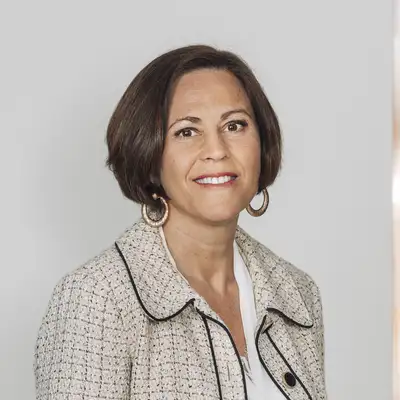
You might think you're living in a geopolitical thriller when you hear experts compare today's AI race to the invention of the nuclear bomb. But it's not fiction, it's today's reality. On this ScreamingBox podcast, we are going to discuss AI governance, global risk, and the leadership required to allow humanity to survive. Please like our podcast and subscribe to our channel to get notified when the next episode is released. Everyone is talking about the breakthroughs and opportunities that AI is bringing to business, but far fewer are talking about the governance vacuum surrounding it and the threats it can pose. Welcome to the Screaming Box Technology and Business Rundown Podcast. In this podcast, Botond Seres and I, Dave Erickson, are going to explore how AI is reshaping global risk, governance, and responsibility with Helena Hornbrant, a visionary leader in secure data-driven digital transformation. Helena builds and scales globally AI that is analytics driven with capabilities to support profitable, sustained growth, combining strategic thinking, customer obsession, and hands-on execution in complex, regulated, multi-brand environments. Today, Helena serves as an executive tech leader in the financial services industry, with her last role as Chief Information Officer and Chief Digital Officer at Tranton Financial Services, where she led the group's IT and digital transformation journey. developing secure data-driven solutions that empowers people, strengthens trust, and drives innovation across financial ecosystems. Before joining Tranton, she built an extensive career across the technology and mobility sectors through senior leadership roles at Scania, Volvo car, Mobility, and NASDAQ. Her expertise spans cybersecurity, AI and data architecture, digital platform strategy, and enterprise change management. With a consistent focus on creating secure, scalable systems aligned with business growth. Helena is passionate about the leadership rooted in empathy, curiosity, and accountability. Outside of work, she advocates for women in technology and champions diversity as a catalyst for innovation and resilience. Helena, welcome to the podcast.
Helena Hörnebrant (02:37)
Thank you. Thank you for having me. Thank you.
Botond Seres (02:40)
Welcome.
Dave Erickson (02:41)
To begin with, what first inspired your passion for technology?
Helena Hörnebrant (02:48)
Yeah, that was such a good question when you wrote that to me. I mean I think it was my third company I joined, which was a very small Swedish software company that today is actually NASDAQ. I think I got so inspired by there was so much energy, entrepreneurship and just passion around how technology can change some of our most complex businesses like institutional banking. So I think that's where I got it from and I was hooked.
Dave Erickson (03:20)
To those who know AI has been around for a while in different formats, when did you first encounter AI in what you were doing?
Helena Hörnebrant (03:31)
We did our first AI model almost 20 years ago, like the beginning of AI. It was not that sophisticated, but it was still the same type of structure and I've learned now that I'm at studying some at MIT that they're talking about the fourth and the coming fifth evolution of AI. So I assumed this was early, early days. And it was really the first take on that was
you know, how do you clean the data because it, the responses and and the result got really wrong when you didn't have the right data. So yeah.
Dave Erickson (04:09)
Yeah, and AI is particularly good at looking at data and going through it. And if it's given the proper guidance, can actually use the data for some pretty decent prediction models and other things. That kind of gets us into the first concept that we might talk about today, and that is governance. What do, you how do you define AI governance? What is, what does that term mean to you?
Helena Hörnebrant (04:40)
Can I back up and give it some stage and maybe some meat on the bone for people who it's not maybe as into the details as we are on this pod? I think that for me, I think if we start by the fact that the common person, if you ask somebody in Europe today, they hear a lot about it in the media, like every single day. But when you ask them what, how they are exposed to that, they would probably go chatbot. So the symmetry of what the bad guys or the organized crime situation is where they are really using this for fraud, fraudulent behaviors, then that gap is really large. And we have, if we look at the statistics, a crime rate in in in the world where the global financial fraud loses about $440 billion a year. And just in terms of deep fake, it has increased over 1600 percentage from 2024 to 2025. And in Europe, we can see it's been increasing over 2,000. So it's running. And also, if you compare to maybe two years ago or even maybe a year ago, and maybe you know this better than me, they used to having to have at least 10 to 12, 13 seconds to record your voice or your behaviors, biometrics, and today it takes three seconds. And I think so that asymmetry, the cognitive depth of the normal person that's not an IT nerd like us, and what the bad guys are doing. And then I also think that if you take it to the next step, so maybe the common person use it or get exposed to this through their bank account, or they've been skimmed, or maybe got got like an email wrong, or somebody you know lost some money on it. But just that too is quite small if you compare to where I think we have our biggest problems. we have deepfake calls to banks today, that's 1 in 127. And it sounds like almost nothing, but if you have a few hundred calls a day, you actually have one of these each day, or at least every other day. And then if you look at the pro projected just increase of deepfake frauds in the states, it's over 40 billion dollars. And in Europe, 62% of all the financial organization has been exposed to this and lost almost like a million. In UK, solidly, it's 570 plus million pounds a year. So if we could use good things from this money, we could actually do some really cool stuff. But I think even worse. So now we take it from the human, normal human to institutions, and if we look at the country and the society. Maybe the worst part is still that it's used to really screw up our ballots, the, the actual true fundaments of our democracy in terms of disinformation. And I think it's not so much about the fact that we get one or two sources. Is this correct? This is not correct, it's actually the fact that they're working so hard now that they actually want you to disengage because you don't trust any of them. And I think now we're really down to bad, bad exposure to us, and we don't know what to do with it, and the most people don't understand it. And, and the latest that we heard here in Europe was that they took your friendcrowds on social media and they tried to make everything your friend said, disinformation on that. So they're really screwed with your closest true sources where you turn to. So now we have sort of the society and then we have the next step of it where we have the warfares and how that's handled. And just I know that it it's it's a long parallel possibly with the atom bomb. Well, I know everybody saw the movie of Oppenheimer and think it's only Oppenheimer, but there there's really four brilliant guys, Bertrand Russell, Rothblatt, Einstein and and Oppenheimer were working on this. So we had like brilliant people working on something that they thought was a bomb that structurally and fundamentally changed their geopolitical society and the situation in the world. And I think if you draw that parallel, we have some brilliant mind giving us a new type of weapon. And yes, it cannot be fully compared. But the worst part is it's not founded a one place or four places. It's actually developed everywhere, processed everywhere. We have no clue about the consequences.
Dave Erickson (10:02)
It's a global situation. It's a global situation. It looks like that you know, obviously on the the evil side or the criminal side, they're basically using AI to manipulate all the people with disinformation and that, and they're also using it to manipulate banks and governments by creating fraudulent transactions and other things. I mean people are feeling it in things like fraudulent emails and other things that are deep fake, but it can go even deeper, including telephone calls and video calls, and it's only gonna get more powerful for that. So that's kind of the, the threat in a sense on a global scale, correct?
Helena Hörnebrant (10:51)
Absolutely. And I think that I still hear to this day if it's gonna happen, and I'm like, it's not,, if it's gonna happen, it's when and how often and to what spread. So that the and, and the reason I took the the individual companies, countries, and then the bigger picture, whether it's EU or US or the world or whatever we, the scope we want to take on this. We all have part in this. Like none of us can say now, no, that's not for me, it's for somebody else to take care of we are responsible, all of us, in this. And and of course, we have the whole debate between the US and and Europe, but also China and Russia and Europe is very much slowing things down, is the common way of briefing around that and Stopping innovation to try to regulate. And then you have that, where do you want to go with this? And and we have the extreme of people in Silicon Valley that screams at Europe saying you know, compare it to almost murder. And then we have we have the the guy who in basically the founding fathers of AI, I know that's also debatable, but got the the Nobel Prize and and who who dropped out of Google to be able to speak up and really take the conversation of the consequences of this. So I I think we have, we have all nuances of people wanting to do different things.
Dave Erickson (12:33)
I I mean there there's kind of a comparison with nuclear weapons. You know, the United States and Russia started going off the deep end by a testing bigger and bigger bombs and then building more and more bombs. But at some point the humans who were involved in governing nuclear weapons said, we can destroy everyone, maybe we should do something to prevent us from destroying everyone. And so they actually pulled back and had some governance and regulant regulation in that sense, or tried to. there's still too many nuclear weapons, but we haven't blown each other up yet. With AI, it's a little bit different because you have maybe two components of that. And that is there is technically a human governance side to it. The fear that a lot of humans have is that AI develops some form of consciousness and then it can decide whether it wants to, you know, eliminate humans because they're a threat to the planet or something like that, right? So there's kind of two, two sides to this. The one where AI has some form of consciousness and decides what it wants to do. I don't know if that's really something that at this point in time is close enough where we have to worry about it, but I assume it's going to just happen at some point., but then on the human side, part of that is governing it so we control it so that doesn't happen, right? Yeah. So I I guess now we kind of have some kind of a framework for the concept of governance. Botan, from your side, what do you think? Or what what what questions do you have?
Botond Seres (14:20)
Right. So in my personal opinion, the thing about AI and our comparison with the atomic bomb is that it misses one key thing, is that the atomic bomb is in general one big bang, right? But AI depending on the malicious actor, personally or institutionally, our exposure can be completely different. Like for banks that they could receive targeted deep fake calls or us as individuals are exposed to lots and lots of AI influencers. Many of them have malicious intent trying to convince us to buy something we don't need in the, in the kind of scenario. Yeah. But I I do think it it's such It's such a multifaceted issue that we haven't adapted to it to it yet. Because as a society we're pretty much adapted to, to malware in a sense. Like don't click weird links in emails, don't download files that say totally notovirus dot executable, right? But we we don't don't really have the same filter for AI just yet. And and we we didn't really manage to create an automated filter to do this. Like, we have antivirus software built into every single machine on this planet, but we do not have an anti AI software at this point.
Dave Erickson (15:57)
An anti deep fake software.
Botond Seres (16:01)
Right.
Helena Hörnebrant (16:03)
And I and I think even if you're positive I think this was a very positive statement from you as well, but then because I I I in Europe still 62% was the latest statistics is from social engineering, the actual cognitive gap of what is it that I should and should not do. So, so it's still the number one fraud that we are exposed to. But it it what, but if we divide them up.
and really look at the types of fraud. So maybe that's what we have to do because it's such a big topic, right? So when we're trying to solve everything at once, I don't even know how to do that, to be honest. but I think we need to look at the governance level from a citizen. What do we need to know and learn and take responsibility for? What do companies need to do? What's the leadership within the companies? What's the leadership within the countries? What can they contribute with? And what's the leadership in their economic space or area? Is it EU or US or whatever it is? And I think that that's that can have different focus. And I think that war part or the the really bad part is should be part of the global organizations like United Nations or EU or the Americas or APAC or
Dave Erickson (17:35)
There needs to be something because there technically is a quote arms race, meaning the various countries, at least the various countries government slash military, are trying to develop AI as quickly as possible to attack and defend, right? That's independent in a sense of the business or commercial side who's developing AI for making as much money as they can as quickly as possible. It's kind of two different goals in a sense, and I don't know how connected or separate they may be. And when we come to talking about the concept of governance, I mean maybe we have to talk about it as, as you suggested in in levels. There's kind of a business conversation of government. How, how do businesses govern AI within business? And then there's the bigger picture of governments and society, how does governments have governance over AI? And then globally, which although technically the UN is a global organization, you know, if you have all these large countries trying to build AI for their weapons independently, I don't know how a global organization can control them in a sense, but that would be the highest level of governments. Where do you think governance should start at this point?
Helena Hörnebrant (19:07)
So I don't, I don't think we can start at one point. I think we need to start everywhere, to be honest. I but if we start at the top, I think the first natural thing that we talked about is the cross-border risk. So if you have a multinational company that's everywhere, take my company for example, where do we get concentration risk? Like how where do we actually use the same
cloud same threat to vulnerability analysis, the same models, the same ERPs and systems and all that. Like how do we how do we or organize ourselves around that and how is all banks in Europe allowed to be in the same cloud? Most likely not. Can the payment systems use the same cloud or surveillance system? Most likely not.
Botond Seres (20:03)
That's too, I think that’s a bit much.
Helena Hörnebrant (20:05)
And then we have the the the the the the in like the cr crisis in terms of hardware and infrastructure, you know. do we actually save in one place? Probably not. We are saving in maybe through blockchain in in thirteen or fourteen or fifteen countries. So if it goes down in one place, we can take the other one. Can we have data centers that's closer than fifty miles? or how do we do them? So I think we need to look at both infrastructure, both services that we buy, and even more importantly, our partners, like vendors. SAP, one of the biggest ones in the world. Can everybody use their only? Or can everybody be in the cloud then? Or how do we do that? So, so I think that type of governance we need to have on a European Union level. We, we have then standards. We have stricter standards in Europe than anywhere else in the world. We have maybe Brazil is a bit tougher on certain things. We have certainly China being very restrictive, we have Korea, we have a number of countries that's super restrictive, but maybe don't keep standards for many countries. So that, that's also like what kind of standards do we use for certain services. So that's for me is like the minimum government.
Dave Erickson (21:41)
Where would, where would people go? Where would companies or even people in politics or the military go to say what are some of the governance standards that we need to have if on a minimum level of security, let alone on a level of control, right?
Helena Hörnebrant (22:03)
I think it's I've been listening all week to parliament debates in your your EU and people are so frustrated sometimes. It's like they get five minutes each, they need to drive questions, we they're dividing into groups and you know, some are for innovation, some are for regulation, as and the most parts people are on the scale in between. But I think we need to use, if it's payments and if it's banking system, the natural should be European central bank, if it's energy infrastructure, if it's phone and communication lines, maybe it's use and security, maybe even NATO, you know, depending on where this will go and in what sense is this a crisis thing or is it European normal standard because if we close down all payment system, we're still gonna be in trouble. If we take down all communication line, we're definitely in trouble. What happens then? So I so I would assume that that kind of collaboration will happen through NATO, but EU will have their own standard.
Dave Erickson (23:23)
That's kind of a problem globally because the, all the systems are, whether they're EU originating, US, Asia, whatever, they're the the financial system is now connected globally. It's it's it's literally one network. I mean it's not one hardware network. It's many hardware networks, but they're all communicating to each other because you can send money from you know, France to the Congo and from Congo to Alaska, you know, it's all moving around, right? And it doesn't matter how many hardware systems, they all have to work in a way where financially it makes things happen, right? And I think that's the, the problem is if you have a bunch of different governance all over the place, then you know, in one area of the network it's strong, but another area of the network it's weak any kind of system is only as strong as its weakest point, right?
Helena Hörnebrant (24:24)
I think we're there already, to be honest. I think we already have weak spots everywhere when it comes to communication. Definitely have as an energy. Sweden has most of its energy production is completely clean. We sell it to Europe, we get back coal energy. So and we do it super, super, super cheap. We are coal country, dark country. We have few people, but we can actually support all of ourselves, but we sell it and then it's lacking in Europe because they don't do the, have good electricity or energy production. So it becomes very expensive. So we already face all of those issues and and and one of the debates that we had in the parliament just a month ago, I think it's a month ago or it's a couple of weeks ago, just before the summer, was, you know, where is it a strength to be divided up into small countries to isolate risks? And where is it actually a higher risk to do it? And I think the jurisdiction problem that I think you are into now is a major issue. That we, we have separal sep several different jurisdictions. And normally in Europe what we've done is the more money laundering you ha you have, the more stricter European Union has their regulatory framework and then the country who has a lot of money laundry does it even stricter. And so I think we're still gonna have those nuances, but it's like the environmental problem. Just because you isolate it in one place it doesn't help for the rest, you know.
Botond Seres (26:12)
So if you're talking different jurisdictions, Helena, do you think that we are going to face the same problem when we try to regulate AI or, or set rules of covenants that we might have different jurisdictions in Europe and let's say in Ireland for example, people could develop completely unrestricted AI systems, even mm, ones that could eventually go into the paperclip problem. And meanwhile in France or Germany we could have very strict rules that say, for example, every AI system has to have a backdoor, a codebord that instantly shuts it down.
Helena Hörnebrant (26:58)
I really hope not, to be honest, but I I'm sure it's gonna be like that. So I think that in Europe we need to think through, through it a bit different. We might need to have sandboxes that has extra restrictions where you can try out things. But now we're looking almost like I would assume the same structure you have in research. So you have a lot of primary research, and then you have secondary research, and then you even have top now when you use cross-functional research to actually give you more data points and more, more pattern recognition to certain areas. And I think here we we we need to build sandboxes that's more safe and that you, you get to share that information, especially on the underlying technology. We all, no matter if it's private, it's corporate, or if it's countries or EU or whether it's organized crime, everybody uses the same technology and everybody used the same communication lines and everybody's using the some are just smarter and faster than the rest. But but I do believe that national cyber resilience needs to take another story. If you just compare the Scandinavian or Nordic countries, I think Finland is outstanding; Standing on war resilience or well pe not worldly, I don't know how to express myself here. So let's take that up. But crisis management. How, how do you go in as a country and prepare your people when something is happening? They have been living so close to Russia, so for them, they have all the bunkers ready and everybody has already their survival kit at home and all that. And and if you compare it to Sweden, that's almost nothing. People don't even know what to do. So, and we are very close to Finland. So, I think we we all gonna have national cyber resilience that looks a bit different, and that's okay. But we need a standard that at least bare minimum, and we've tried that with DORA in the financial, but we also have it in NISC, another regulatory framework. And people are complaining a lot about DORA is so hard and it's so complicated. But to be fair, it's only processes following up risks. So we're not still. Talking about standards of AI model standards or this is the security standard or this is where you need to save data in five places instead of two or this is the area where you have most identity thefts and this is you know, we don't have that, those kind of standards clearly for as a bare minimum.
Dave Erickson (29:48)
Part of the governance problem is also who controls the governance in a sense.
Botond Seres (29:54)
Absolutely. That's kind of the biggest problem in governance in general.
Dave Erickson (30:02)
Yeah, I mean in the United States, our government is a is kind of a paid representative at this point. Those who can pay the the representatives enough money, in the form of contributions, campaign contributions and others gets to have their way legislated, right? And I think a lot of the AI companies that are around are have, have shown they're doing that by doing a lot of political campaign contributions and then getting legislation that favors what they would like versus what's best and what they would like is more money or a way to earn more money with AI and that doesn't necessarily allow for governance. Some of them have some self governance, like anthropic, which said, Hey, we think our AI is a little too powerful and in the wrong hands. It can be used in you know wrong. But yeah there's others Companies that do not have that self governance in that sense and they can get legislation that allows AI to, to go maybe too fast. And then obviously there's countries where they have a single source of government or a dictator or whatever, and they can make the priority, well, it's all about the military and they'll develop AI however they want. I, I can't I what kind of governance can, can we have that controls all those differences, right? Of how governance is even applied. I think that's a really big question that we don't have an answer for yet, correct?
Helena Hörnebrant (31:39)
No, we don't we don't have an answer for that. And just like we have had tax havens, we're now having warfare havens, whether trial bases, whether it's in Ukraine or Russia or or whether it's in one of the African countries or or in in Asia. So so we're seeing these havens growing up. And we will have innovation havens. At the same time, we have Silicon Valley and we have Stockholm. That's the second from Silicon Valley and completely different environments, completely different regulatory frameworks, completely different type amount of money. It is to such an extreme that the big funds might not go and invest in a Swedish company like that, like through a venture capital in Sweden or so, they might actually invest in American funds who go back and invest and buy a company in Sweden and bring it back to the States. So of course we, we in Europe we have a big problem with keeping the funds and keeping the companies to stay in Europe. But I think th th this problem already exists the whole time. Yeah. And you can produce the same result with different regulatory frameworks. We know that Portugal used to be terribly weighed down by crime rates. They put all their money, turned it around and put all the money to proactive working against crime and they manage to decrease it tremendously instead of using it post crime caretaking of criminals. So the same can be reached but with different types of culture or maybe fundaments on what we believe in human rights or or who can decide what. In your life. But I I believe that none of us can escape the challenge. And I think we as leaders, for example, if we used to be, if I'm in a group management position like I've been in, I used to have information reaching me faster than my employees. I used to be able to get the structure of the company and the strategy. Before them, we used to be able to get the full picture of my own silos before and own that data or the truth of that, what I wanted to send out. And now all that fact and analysis is is is done by AI. So my information asymmetry towards my employees is no longer there. So then I I I am responsible still and and and to make the best of what I've got. And that's normally according to law in most countries. You can't talk, just come in as a manager and not produce profits or just do whatever you want. But I think now we have so much more time for empathy, compassion, really get people in, retrain people, get into that. So, we talk a lot about EQ, but also fun Q, so FQ. How do we get people to get into the offices and stay in the offices and be inspired to do the best that they can? That's still one part of it. The other part is accountability. How do we take accountability of what we spit out on innovation side? And how do we take accountability for that type of governance? And I think this type of management and leadership skills put a completely different way on the shoulders of a leader of tomorrow than it used to do. You can't hide any longer. It's gonna be very easy to find who didn't do a balanced judgment. And I'm not talking about making mistakes. We all will make mistakes. I'm talking about how we take responsibility and accountability for the end-to-end value flow, not just your organization style. So we need to breathe life into a new type of leadership skill everywhere, whether you're a politician, corporate leader, or a parent for that matter.
Dave Erickson (36:11)
Part of this is employees right now, a lot of employees are feeling very insecure about AI. And what they're afraid of is AI, quote, replacing them. And this is where the responsibility of leadership it's really going to fall. And you're going to start seeing those who really can lead and those who cannot. Those who cannot, don't find solutions to put that fear aside. And those leaders who can find a way to get their employees to grow and to adapt will be much stronger for that. And I think you're gonna see a real separation, particularly in business, but also in government, of those leaders who can keep employees motivated and evolving to use AI for a productive good, or they're going to be those leaders who find that they're having to fire their employees because AI is taking over their work and then they get caught in the loop of well, they have the AI running a lot of things and they get the same AI slop and AI lack of innovation that others do. I I I my belief is that that humans, AI right now doesn't think. Humans do. And leaders who can get their teams to start doing the thinking and then using AI to get the productivity, they're the ones who are going to be successful.
Botond Seres (37:46)
Didn't the Wall Street Journal just report a month ago or so that we have reached a point where it's cheaper to hire humans again than AI for more?
Helena Hörnebrant (37:56)
Yeah, I heard that. It's actually cheaper in a many senses. Yeah, exactly.
Botond Seres (38:02)
That's hilarious.
Helena Hörnebrant (38:04)
Yeah, it is but but I still think that there you know the the business of doing a crime is so much cheaper than the business of surveilling it and monitoring it. So we we also need to converge the actual technology to be cheaper. And that's where the government's government can come in and really support tech innovation in surveillance and and monitoration. And and this is a tough scaling because you want to be supportive, not controlling. And at the same time we see that the bad guys are so far ahead of innovation and and and results. So we need to be both controlling and innovation.
Botond Seres (38:47)
I feel like at some point we might need to discuss some scary words like non-profit or nationalised companies for for AI in general.
Helena Hörnebrant (39:01)
I think so too. And I think how do you share the information? How do you get faster if some company comes up with something? How can we share that? Or between the universities? and and if if the students cannot just learn facts and they they need to be more practical on what would that be? Will we only have business schools or will we actually have innovative schools? There's many new universities popping up now where they are picking the top of the world to solve problems. And it's such expensive. So unfortunately right now it's only for the wealthy part of the world, which which which really scares me because the polarity is getting even even worse. But we need to do the same for solving societal problems and use funds to get people to want to do that.
Dave Erickson (39:58)
There's a motivation for people to succeed. And in a sense, the motivation to succeed in some ways is greater the poorer you are financially. And a lot of innovation comes from people who are they don't have much in life. The only way they're gonna be able to pull themselves up or do something is to invent something or become inventive or just work harder or they have the motivation to do it. Whereas people who are much wealthier, they're just trying to figure out how they aren't bored, right? Because everything is easy because they have money and they can solve every problem by throwing money at it. And they tend not to be so innovative. And and so it it society is divided in that sense. And so the people who have the money and have can go to school and all that. Yes, they do invent things and all that, but their motivation is for in a sense is less driven. Whereas if you're lower down on the s financial scale, you're really driven to succeed because you you gotta eat, you gotta find a way to survive. And AI is a tool that can be used to do that. And I think people are recognizing that. And so you're gonna see a lot of AI
application done on a lower economic scale as a way of getting ahead. At the same time, because they're motivated to succeed at any cost, they're the ones who may need the most governance in a sense, because they'll do anything they can to get ahead. And that's probably what drives a lot of the crime organizations to generate AI. Hey, here's some easy money, do this, right? Whereas in higher end of the economy, they're less likely to do that if they're gonna commit crime, they're gonna do it on a much larger scale and it's gonna be more institutionalized, such as tax evasion or money laundering versus scamming people out of money. That's gonna come more from the, the lower tier of the economic strata. And I think that governance is gonna have to kind of look at it in from that perspective as well, you know, people who need money and are driven to find a way to make money, they need a governance that has compassion for that situation, right? and helps guide them to do things in a way that isn't crime oriented or getting money the easy way, right?
Helena Hörnebrant (42:43)
Yeah. I I I I absolutely think that. And and I think this is where differentiate maybe between the US and Europe and possibly the rest of the world as well. But you you do that very well through a lot of non profit organizations. And and that's something that we in Europe need to adopt more and more, that way of thinking. we do that a lot through the governments, especially in the Nordic regions, but but I think we need to be more completely neutral and since Sweden are no longer a neutral country, that's gonna be more of a tool for us to go the non-profit way as well. And how do we Sweden, as you probably know, has been one of the biggest music oracles when it comes to producing and even writing music, as one of the best in the world to just be that few millions that we are. And we we started in the school by teaching people, well we forced people to play the flute or do other music in school, and we really put the effort into it. We did the same thing in sports. But I think next, next up is how do we make innovation much more available? And if you compare us Sweden, we still have a lot of multinational companies. We have one of the number one and sometimes it's number two, depending on the area, of best investment firms in the world and we are operating within a social democratic system, so so everything is possible. We just need to know how we can multiply the good ones and see how we can speed it up. Almost like a tax haven, we need to have an innovation haven and support more people to do that. And, and I, I and we are trying everywhere in Europe, and I was I assume you do the same in the States. So just that would be interesting to share data on how do you get people to drive innovation with their full heart and passion in that for the good in the world.
Botond Seres (44:56)
I mean historically to me it seems like the way Innovation Haven seems to do it is just throw money at people who have ideas that are attractive to rich investors.
Helena Hörnebrant (45:11)
Yeah. And we we we haven't done it that way up north. We have given them free spots to sit in, we have given really cool mentorships, we have given very light startup capital, like very, very light, we have done hackathons or that type and then we have the states who's been throwing money at this type. So, I'm sure there's gonna be plenty of models, but if if we talk about a school system that's no longer gonna be about facts, what is it gonna be about? And I have definitely gone to class at where I know that they have trouble getting students into the technical courses because the student thinks they know more than the teacher does and they can they already have two or three companies started. so so we we I think we need to question a lot of things and stay curious and really analyze and listen in and and and and also as a human being, as a leader, as a friend, how do we do that?
Botond Seres (46:28)
I mean, if we are just talking school, I I have a very strong feeling we need to encourage students to just tinker, to provide the materials and some discretionary spending, like I don't know, to allow a child to buy a solar panel and a battery and make something out of those two parts. Maybe add a third part that works off of the stored energy. For me growing up in Europe, I I've always felt like it it was almost frowned upon if a child tinkered with anything. Like it was viewed as destruction more than creation. I I I don't know how that is up north, but I
Helena Hörnebrant (47:15)
We're probably more open minded in that sense, but I still think that we're teaching people facts not to think all the time. And we need to grow that curious minds more. We're far from there. And and I think if we look at the school system, the country in Europe that's worked best with the best results with no tests, by the way, until late, and with no homework, has been Finland. And still the rest of Europe, including Sweden, are complaining that the school doesn't work, and Finland has outstanding results. No homework, more support and how to learn things and very little test and still their scoring best on the European Central Tests.
Botond Seres (48:04)
It sounds like reducing unnecessary stress is, is a good idea. Yeah. When we're trying to raise children as a collective.
Helena Hörnebrant (48:12)
More pull than push. Yeah.
Dave Erickson (48:15)
My twelve year old daughter, if I want her to learn or grow, the focus a lot of it is just relieving her stress so she feels comfortable in doing that. And trying to get a twelve year old girl to to be less stressed out is not an easy thing. Tell my wife it's very stressful trying to de-stress my stressed out daughter. but you know, when she does kind of relax, she's able to learn well and and do well and so I th and you know, the schools, you know, the the whole testing thing is very stressful for students. And I I agree in a sense, I don't know how well it's actually preparing them for anything because they seem to learn when they're not taking a test and tests don't really teach anything except how to take tests.
Helena Hörnebrant (49:06)
So but also when we were brought up, I mean I'm probably the oldest in the room here, but we didn't have so many distractions and we, we certainly had a lot of downtime. We had boring stuff to do which was very good and stimulative.We we we we had a lot of time outside to meet people, connect with people and and learn from different places and not just school and and our kids now they're on stage being evaluated, whether they are in, you know, idol or they're gonna present something or they put a picture on the social media or so so I think th I'm not surprised that they're stressed. It we're not made for the world that, that we force them into.
Dave Erickson (49:58)
Yeah. And and AI is not making it easier. You know, this is where that concept of governance in the the social area, how do we apply AI so that it doesn't harm the people, not physically harm or economically harm but emotionally harm right? And you know, the the concept that a lot of information is now deep faked and and they're being manipulated. The reason that they can do that is because they have their face in their iPad staring at social media all day long and their thoughts come from that. So of course they're easy to manipulate. And so maybe some of the government governance has to be about how does that happen? How do how do we make it so that the kids aren't so locked in or, you know, again, and and this is something that Europe is doing you know, they're suing Meta Facebook because of a lot of this and that those companies need to control some of the AI and deep fake that's on there as well
Helena Hörnebrant (51:07)
Mm.
Dave Erickson (51:08)
because it is a real hazard, right?
Botond Seres (51:10)
Honestly, Dave, I I have a very unpopular opinion, at least unpopular here in Europe on on smartphones in schools.
Helena Hörnebrant (51:18)
Always interesting to hear.
Botond Seres (51:21)
Personally, I grew up right on the cusp when smartphones started to become a thing and I took them to class every single day. And of course I was playing games on it and things, but that helped to quiet my mind and actually be able to take in what the lesson was about. And I wasn't getting annoyed if lesson was going slowly or if some explanation was taught over and over and over again. And at the same time I had the entirety of human knowledge in the palm of my hands and I feel like removing that element from from schools in itself is not the ideal way to to deal with this issue. Blocking social media in school, totally agree. Even for children, even for adults, I mean again unpopular opinion, but that's what I think.
Helena Hörnebrant (52:16)
Hmm. No, I th I think i I think you've spot on and we have many schools now that's just decided you're not allowed. It doesn't matter if it's eight o'clock, twelve o'clock, or four o'clock in the afternoon, no one gets the phone. unless they're on actual AI and that they can start to train on that and see that. So that that would be interesting to see. But I I assume we need to be very strict with strong digital identity and actually give out those. I think we need to continue learning about phishing or deepfake, and there we definitely need more nonprofits who goes in and really help you to analyze because we don't want disengaged youth or people in the society. We need people to find places where they can trust. I think it's easy as, you know, take this update. Don't stay with it too long so you don't get skimmed that way. And design, we talked about that before, both of you mentioned, you know, how do we design security? How do we design safety for both your mind and body and your identity? and continue reporting and reporting and reporting and reporting. We we we need to get it up whenever we are being exposed to fraud.
Dave Erickson (53:45)
Because AI is so good at faking things, I I wouldn't say it's so good. I see a l I for me, it's really easy to spot AI. But I study it and I'm kind of trained a little bit in it. You know, older populations, people who are much older than us, they're really falling victim to a lot of the, the deep fakes and stuff. They don't seem to recognize it. My daughter doesn't really recognize it, but she doesn't really look for it. She just assumes everything is real, but sometimes she can see stuff, saying this is really fake. But you know, the idea or the concept of a digital identity, you know, that's problematic in the sense that, well, it's digital, therefore AI can fake it. But finding a way to somehow connect it, I mean, it used to be biometric facial recognition, but now you can fake that. Now it's, you know, retina scan, but that can also kind of be faked a little bit. Fingerprints. I mean, where do you go to come up with an identity that can't be faked or cloned?
Helena Hörnebrant (54:52)
Yeah, that I think that's our biggest i i challenge at the moment. We thought biometrics would be your passport and safety, it's not. So what what will it be? we thought your fingerprints would be well that's easily faked as well. So so s so d this is the next new thing.
Dave Erickson (55:12)
Yeah, I mean it might it might come down to a blood sample and analyzing the DNA to get an identity that can't be faked, but who knows.
Helena Hörnebrant (55:24)
Yeah, who knows? That that that that is scary. And also we we have a lot of debate here also on digital money. Do the government needs to launch their own bitcoins or be be ahead of that to supply safe money? But I mean we're already using mostly digital money, even the countries that have a lot of liquid into the society. So, so where do we control then and how do we go? And I mean, then we're backing up to well, that's a new whole new pod. But that would be interesting to discuss how how we go from, you know, we backed our currency in gold and then petrol and then what what's gonna be next, you know, it truly and how are we gonna steer the money?
Botond Seres (56:15)
Some people seem to think it's computers, even now.
Helena Hörnebrant (56:19)
Yeah, and but let's not go into that because there there's a lot of complications with that and who who becomes the king at this in that case. but but it is interesting to to see where that that will go. and Sweden is one of the most digital payment system in the world, so we are now asking people to save cash at home in case of emergency because people don't I mean, my kids don't even know what the cash looks like any longer. You know, we we we truly need to find new ways.
Botond Seres (56:59)
Right. So Helena, in your opinion, what is the future of AI governance?
Helena Hörnebrant (57:07)
I think the future of AI governance is gonna be multi-layered. We're gonna have everybody involved. It's gonna be on the global level, it's gonna be on, in your economic area, it's gonna be on the country, and it's definitely gonna be on individual, company and individual. Right now, the urgency is identity.
Botond Seres (57:29)
Helena, thank you so much for joining us and helping us explore how AI governance, responsibility and global collaboration will shape the future of technology.
Dave Erickson (57:38)
Well, we are at the end of today's episode, and I'm sure you have plenty to think about after this conversation. But before you go, we want you to think about one important question.
Botond Seres (57:48)
If AI is being developed everywhere by everyone all at once, how will you ensure your business is prepared and protected for what comes next?
Dave Erickson (57:59)
For our listeners, please subscribe and click the notifications to join us for our next Screaming Box Technology and Business Rundown podcast. And until then, try using AI to build something meaningful and something safe. Thank you very much for taking this journey with us. Join us for our next exciting exploration of technology and business in the first week of every month. Please help us by subscribing, liking, and following us on whichever platform you're listening to or watching us on. We hope you enjoyed this podcast and please let us know any subjects or topics you would like us to discuss in our next podcast by leaving a message for us in the comment sections or sending us a Twitter DM. Till next month, please stay happy and healthy.
Creators and Guests